Why a 7-Day Money Reset Works
Money problems rarely begin with one dramatic mistake. More often, they build quietly through ignored subscriptions, vague budgets, convenience spending, rising interest charges, and that familiar “I’ll check it later” feeling.
A 7-day money reset works because it shrinks financial change into something your brain can actually handle. One week feels urgent enough to matter but short enough to start today. You’re not trying to become a financial expert overnight. You’re trying to see your money clearly, stop the leaks, and build a simple system that keeps working after motivation fades.
Think of it like cleaning a messy room. At first, everything looks chaotic. Then you pick up one pile. Then another. Suddenly, the floor appears. That’s what this reset does for your finances.
Day 1: Face Your Numbers Clearly
The first day of The 7-Day Money Reset is about visibility. No judgment. No panic. Just numbers.
Open your banking apps, credit card accounts, loan portals, and payment platforms. Write down every balance in one place. Include checking, savings, credit cards, personal loans, student loans, car loans, buy-now-pay-later balances, and any money owed to family or friends.
Next, list your monthly income and fixed expenses. These usually include rent or mortgage, utilities, insurance, phone bills, transportation, minimum debt payments, childcare, and essential groceries.
The goal is to calculate your real available money. That means the money left after your fixed obligations. This number matters more than your salary because it shows what you can actually direct, save, spend, or use to pay down debt.
Your Day 1 Action
Create a simple financial snapshot with:
- Total income
- Total fixed bills
- Total debt
- Total savings
- Real available money
This step may feel uncomfortable. Do it anyway. Clarity is the beginning of control.
Day 2: Find Your Spending Leaks
Day 2 focuses on where your money disappears.
Review your last 30 days of transactions. Don’t just scan them. Look closely. You’re searching for patterns that feel small in the moment but become expensive over time.
Common money leaks include food delivery, unused subscriptions, impulse shopping, rideshares, late fees, app upgrades, coffee runs, convenience purchases, and online orders made out of boredom. None of these are morally bad. That’s not the point. The point is whether they still match your priorities.
A strong money reset plan does not require cutting every pleasure. It asks a better question: “Is this expense still worth what it costs me?”
Your Day 2 Action
Identify your three biggest leaks. Then choose one quick fix:
- Cancel one unused subscription
- Pause one spending category for seven days
- Replace one convenience purchase with a cheaper default
- Delete one shopping app from your phone
- Set a daily spending alert
Small leaks matter because they repeat. And repeated behavior becomes your financial direction.
Day 3: Build a Weekly Spending Plan
A monthly budget can feel too abstract. A weekly spending plan feels more real because you can see the finish line.
Start with the money you have available for the next seven days. Subtract essential spending first, including groceries, transportation, medicine, debt minimums, and upcoming bills. Then assign a realistic amount for flexible spending.
This is where many budgets fail. People create plans for an ideal version of themselves. You need a plan for your actual life. If you know Friday nights usually involve takeout, budget for it or create a cheaper substitute. Pretending you’ll spend nothing usually backfires.
Your Day 3 Action
Set weekly limits for:
- Groceries
- Transportation
- Personal spending
- Dining out
- Savings
- Debt payments
Then create one guardrail. For example, use one card for flexible spending or check your balance every morning. Guardrails work because they reduce decision fatigue.
Day 4: Reset Bills and Subscriptions
Recurring expenses are sneaky. They don’t ask for permission each month. They just keep taking.
On Day 4, review every automatic payment. Check your bank statement, credit card statement, app store subscriptions, PayPal, digital wallets, and any software accounts. Look for streaming services, cloud storage, memberships, premium apps, newsletters, insurance policies, and old trials that turned into paid plans.
Then sort each recurring cost into four categories: keep, cancel, downgrade, or negotiate.
A $20 monthly subscription may not look serious. But that’s $240 a year. Cancel three forgotten charges and you may free up enough to start an emergency fundCash set aside in an accessible account to cover unexpected expenses or a loss of income without taking on debt. without touching your lifestyle.
Your Day 4 Action
Use this simple rule:
- Cancel what you don’t use
- Downgrade what you barely use
- Negotiate bills like phone, internet, and insurance
- Consolidate services that overlap
This is one of the fastest ways to transform your finances in a week.
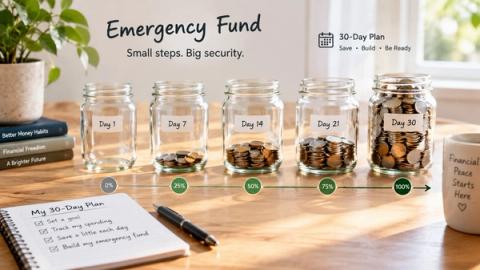
Day 5: Start a Small Emergency Fund
Before you chase big financial goals, build a small cushion. Without emergency savings, one flat tire or medical bill can push you right back into debt.
You don’t need a perfect emergency fund this week. Start with a realistic first target. If money is tight, aim for $100 or $250. If you have more room, aim for $500 or $1,000. The amount matters less than the habit.
Emergency savings create breathing room. They turn a crisis into an inconvenience. Honestly, that emotional shift is huge.
Your Day 5 Action
Set up an automatic transfer to savings. Start small if needed:
- $5 per week
- $10 per paycheck
- 1% of income
- Roundups from purchases
Automation helps because willpower is unreliable. Systems keep going when motivation gets tired.
Day 6: Choose a Debt Payoff Strategy
Debt feels heavier when it has no plan. Day 6 gives it structure.
Two common strategies work well. The debt snowballA payoff strategy that clears your smallest balance first, using early wins to build momentum regardless of interest rate. focuses on paying off the smallest balance first. It builds motivation through quick wins. The debt avalancheA payoff strategy that attacks your highest-interest debt first, which costs the least in total interest. targets the highest interest rateThe percentage charged for borrowing money or paid for depositing it, quoted as an annual figure. first. It usually saves more money over time.
Neither method is automatically better for everyone. If you need momentum, choose the snowball. If interest charges are eating your budget, choose the avalanche.
The bigger issue is stopping new debt while paying down old debt. Otherwise, you’re trying to empty a bathtub with the faucet still running.
Your Day 6 Action
Pick one debt to attack first. Then reduce new debt triggers:
- Remove saved cards from shopping sites
- Pause buy-now-pay-later purchases
- Use a 24-hour rule before nonessential spending
- Keep credit cards out of everyday spending if needed
Progress comes from repayment plus prevention.
Day 7: Build Your 30-Day Money System
The final day of The 7-Day Money Reset turns your short reset into a repeatable system.
Schedule a weekly 20-minute money check-in. Review your account balances, upcoming bills, spending categories, debt progress, and savings transfer. Keep it simple. If the system feels too complicated, you’ll avoid it.
Then create three personal money rules. Good rules remove daily negotiation.
Your Day 7 Action
Choose three rules like:
- I check my balance every morning
- I save before I spend
- I wait 24 hours before purchases over $50
- I meal plan before grocery shopping
- I review subscriptions once a month
The best financial systems are boring. That’s why they work.
Common Mistakes to Avoid During a Money Reset
Don’t try to fix everything in one week. Extreme restriction often leads to rebound spending. You want control, not punishment.
Don’t ignore irregular expenses either. Car repairs, gifts, annual renewals, school costs, medical bills, and travel can wreck a budget when you forget they exist. Create small sinking fundsMoney set aside a little each month for a known irregular expense, so the bill arrives already paid for rather than as a crisis. for predictable costs.
And please don’t treat budgeting like a financial diet. A good budget gives your money a job. It should include bills, savings, debt, and some room to be human.
The 7-Day Money Reset Checklist
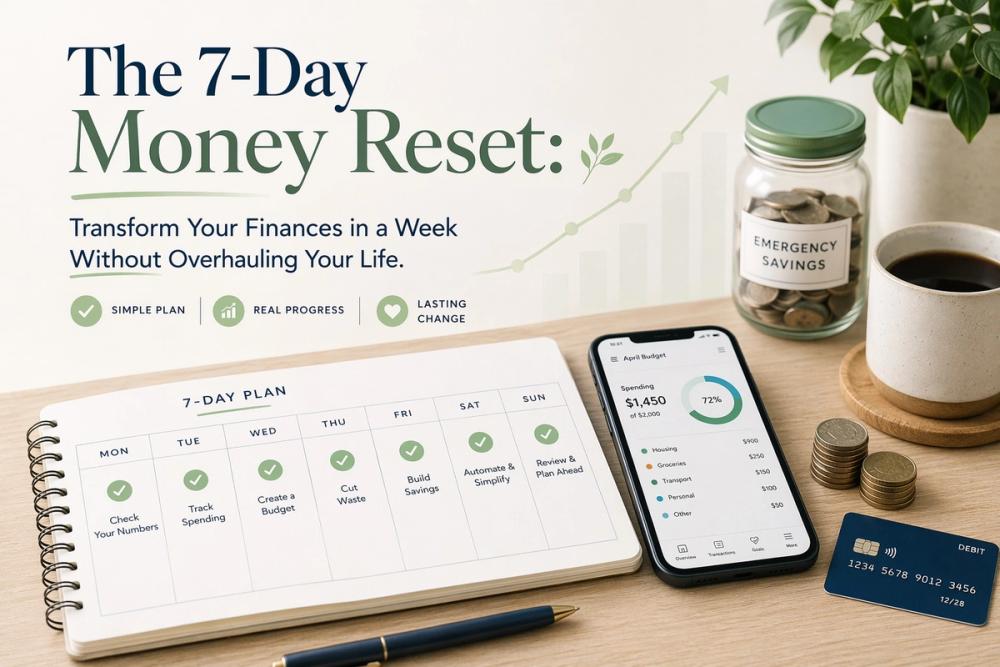
- Day 1: List all balances, bills, income, and debts
- Day 2: Track spending and find your biggest leaks
- Day 3: Build a realistic weekly spending plan
- Day 4: Cancel, downgrade, negotiate, or consolidate bills
- Day 5: Start a small emergency fund
- Day 6: Choose a debt payoff strategy
- Day 7: Create a 30-day money routine
FAQs
Can I really transform my finances in a week?
You can transform your clarity, habits, and financial system in one week. You probably won’t eliminate major debt that fast but you can create a plan that changes your direction.
What if I don’t have enough money to save?
Start tiny. Even $5 builds the habit. The first goal is not a huge balance. It’s proving that saving can become automatic.
Should I pay debt or build savings first?
Build a small emergency fund first. Then focus on debt. Without savings, unexpected expenses often force you back into borrowing.
Meta description: Use The 7-Day Money Reset to transform your finances in a week with practical budgeting, spending control, emergency savings, debt payoff, and smarter money habits.