
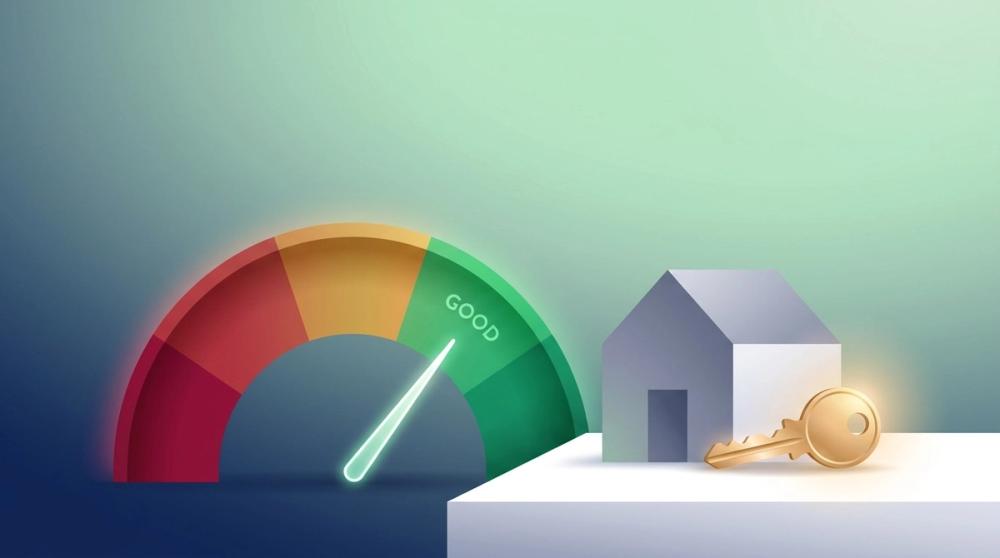
When you start house hunting, one question tends to loom over everything else: is my credit scoreA three-digit number, typically 300 to 850, that lenders use to estimate how likely you are to repay borrowed money. good enough? It feels like a pass-or-fail test. The truth is far more useful. A good credit score to buy a house isn't a single magic number. It's two separate finish lines — the score that gets you approved, and the score that gets you the best deal. Understanding the gap between them can save you thousands.
So, What Counts as a 'Good' Credit Score for a Mortgage?
Most lenders think in tiers, not exact numbers. A score of 740 or higher puts you in the strongest position, where the best mortgage rates live. Push past that and the gains shrink fast. Scores of 760, 780, or 800 don't earn meaningfully better pricing than 740, so 740 makes a smart, realistic target.
Land between 620 and 739 and you'll still qualify for most loans, though you'll pay a premium for it. Below 620, your options narrow to government-backed programs. Below 580, the choices get tighter still.
One detail trips up almost everyone. The credit score in your banking app is rarely the one your lender sees. Mortgage scores can differ by 20 to 40 points from those free numbers. Lenders pull all three bureaus then use your middle score. Applying with a partner? They use the lower of your two middle scores.
Minimum Credit Score to Buy a House by Loan Type
The credit score needed to buy a house depends heavily on which loan you choose. Think of it as four different doors, each with its own bar.
- FHA loans are the most forgiving. You can qualify with a score as low as 580 with 3.5% down, or 500 with 10% down. This is the classic first-time-buyer path.
- Conventional loans generally want 620. Here's a 2026 twist: Fannie Mae and Freddie Mac dropped their hard minimum score in late 2025, shifting to an overall risk assessment. In practice little changed, because most lenders kept their own 620 floor.
- VA loans carry no official minimum, yet most lenders look for 580 to 620. They reward eligible veterans with zero down and no monthly mortgage insurance.
- USDA loans typically require 640 and serve buyers in eligible rural and suburban areas.
Watch for "lender overlays." These are extra requirements a lender stacks on top of the program rules. The score your lender actually wants may sit 20 to 40 points above the published minimum.
Why a Higher Score Saves You Real Money
Qualifying is only half the story. Your score quietly sets your interest rateThe percentage charged for borrowing money or paid for depositing it, quoted as an annual figure., and that rate follows you for decades.
Consider the spread. Borrowers with 760-plus credit recently paid around 7.24% APRThe yearly cost of borrowing, expressed as a percentage that includes the interest rate plus most lender fees. while those in the 700 to 759 range averaged about 7.45%. That sliver of a percent isn't trivial. On a sizable loan it works out to roughly $165 more each month — close to $59,000 in extra interest over 30 years.
The bigger the climb, the bigger the reward. Moving from 580 to 680 can save more than $200 a month and over $72,000 across the life of the loan. Lenders apply risk-based pricing adjustments that shrink toward zero once you clear 740.
This is why tier-jumping matters so much. Raising your score from 739 to 740 can unlock better rates, even though it's a single point. A few smart moves before you apply can pay for themselves many times over.
What If Your Score Isn't There Yet?
A lower score isn't a locked door. It's a door with a higher toll, and tolls can be lowered.
- Pay down credit card balances first. Your utilization rate is the fastest lever you control.
- Check your reports for errors and dispute anything wrong. If you've recently paid off debt, ask your lender about a rapid rescore.
- Weigh FHA now against waiting to reach 620 for a conventional loan. Sometimes buying sooner wins. Sometimes patience pays.
- Have a thin credit file? Ask about programs that count rent and utility payments toward your history.
How to Check Your Credit Score Before You Apply
Start with the facts. Pull all three of your credit reports for free at AnnualCreditReport.com and find your middle score. As of 2026, most lenders use FICO Score 10T, a model that weighs your behavior over time rather than a single snapshot. Steady habits, not last-minute tricks, move this number. For current rate context by tier, Experian keeps useful benchmarks.
Conclusion
"Good enough to qualify" and "good enough for the best rate" are different goals. Aim for 740 to win on price. Don't let a 620 stop you from starting. Know your number, then make it work harder before you sign.
Ready to see what your score really costs? Check your three-bureau scores, then run your numbers through our mortgage calculator to compare rates with confidence.