Interest ratesThe percentage charged for borrowing money or paid for depositing it, quoted as an annual figure. can feel like background noise until they land in your monthly budget. One month your credit card balance feels manageable. Then the rate moves higher and suddenly more of your payment disappears into interest. On the other side, your savings account might finally earn a little more than pocket change.
That’s the strange thing about rate changes. They don’t help or hurt everyone in the same way. They usually make borrowing more expensive or cheaper while pushing savings returns in the opposite direction. To make smart decisions, you need to know which side of the equation you’re on.
What Interest Rate Changes Actually Mean
An interest rate is simply the price of money. When you borrow, it’s the cost you pay to use someone else’s money. When you save, it’s the reward you receive for letting a bank use yours.
Central banks influence this system by adjusting benchmark rates. In the United States, the Federal Reserve uses interest rate policy to manage inflationThe general rise in prices over time, which steadily reduces what each dollar of savings can buy., employment, and economic activity. You can learn more from the Federal Reserve’s consumer resources.
But here’s the important part for everyday finances: consumer rates don’t all move at the same speed. Credit cards may react quickly. Savings accounts may adjust unevenly. Mortgages depend heavily on bond markets, lender pricing, credit scoresA three-digit number, typically 300 to 850, that lenders use to estimate how likely you are to repay borrowed money., and loan terms.
So when people ask how interest rate changes affect your loans and savings, the honest answer is: it depends on the product.
Fixed Rates vs. Variable Rates
This distinction matters more than almost anything else.
A fixed interest rate stays the same for a set period. If you have a fixed-rate mortgageA mortgage whose interest rate is locked for the entire term, so the principal and interest payment never changes., fixed auto loan, or fixed personal loan, your rate usually doesn’t change when market rates rise or fall. Your payment remains predictable.
A variable interest rate can change over time. Credit cards, adjustable-rate mortgagesA mortgage whose interest rate is fixed for an opening period and then adjusts periodically against a benchmark index., home equity lines of creditA revolving credit line secured by your home that you draw on as needed, usually at a variable rate., and some private student loans often use variable rates. When broader rates rise, your borrowing cost can rise too.
Think of fixed rates like a locked door. Market rates may be storming outside, but your payment stays inside. Variable rates are more like an open window. When the weather changes, you feel it.
How Rising Interest Rates Affect Your Loans
Rising interest rates usually hurt borrowers first.
Credit cards are often the most immediate problem. Many cards use variable annual percentage rates. If rates rise, your APRThe yearly cost of borrowing, expressed as a percentage that includes the interest rate plus most lender fees. can climb and your balance becomes more expensive to carry. This is especially painful when you only make minimum payments because more money goes toward interest instead of principal.
Variable-rate loans can also become harder to manage. An adjustable-rate mortgage may start with a comfortable payment. Then the adjustment period arrives and the monthly cost jumps. A home equity line of credit can behave the same way. The loan didn’t get bigger, but the price of carrying it did.
New loans also become less affordable when rates rise. A higher mortgage rate can reduce how much home you can buy. A higher auto loan rate can make the same car cost more over time. Personal loans may come with steeper payments, especially for borrowers with weaker credit.
Still, rising rates create one quiet advantage. If you already locked in a low fixed-rate loan, that debt may become more valuable. A homeowner with a low fixed mortgage may have little reason to refinanceReplacing an existing loan with a new one, usually to lower the rate, change the term, or convert equity into cash.. Paying off that loan early might feel emotionally satisfying, but it may not always be the strongest financial move if the rate is far below current savings yields.
How Falling Interest Rates Affect Your Loans
Falling rates usually bring relief to borrowers.
New loans may become cheaper. Monthly payments may fall for mortgages, auto loans, and personal loans. Variable-rate debt may also become less expensive if the lender adjusts rates downward.
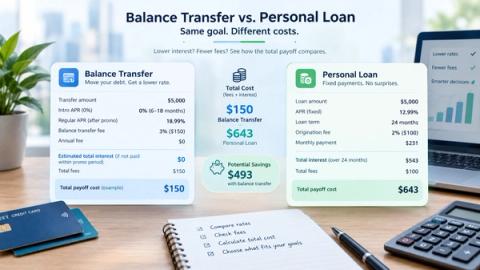
This is when refinancing becomes tempting. Refinancing means replacing an existing loan with a new one, usually to get a lower rate or better terms. It can save money, but it’s not automatic magic. Closing costsThe fees and prepaid items due when a property sale or refinance completes — typically 2% to 5% of the loan amount for a buyer., origination fees, and extended repayment periods can eat into the benefit.
A simple break-even calculation helps. If refinancing costs $3,000 and saves $150 per month, it takes 20 months to recover the cost. If you plan to move or repay the loan before then, the deal may not make sense.
Lower rates can also encourage people to borrow more than they should. That’s the trap. A smaller monthly payment can hide a larger total debt. Cheap money still has to be repaid.
How Rising Interest Rates Affect Your Savings
Higher rates are not all bad news. Savers can benefit.
When rates rise, banks may increase yields on savings accounts, certificates of depositA deposit account that locks your money in for a fixed term at a fixed rate, with a penalty for taking it out early., and money market accountsA federally insured bank account that pays savings-level interest while offering check-writing or debit access.. High-yield savings accountsA federally insured savings account paying a much higher rate than a typical bank account, with full access to your money. often respond more aggressively than traditional bank accounts. CDs can also become attractive because they let you lock in a rate for a set term.
But not every bank passes higher rates to customers quickly. Some large banks keep savings yields low even when market rates rise. Online banks and credit unions may offer more competitive annual percentage yields.
That’s why shopping around matters. A savings account paying 0.50% and one paying 4.50% may look similar on a bank app, but they behave very differently over a year.
Inflation also matters. If your savings earns 4% while prices rise 5%, your money still loses purchasing power. Savings accounts are excellent for safety and access. They are not always designed to build long-term wealth.
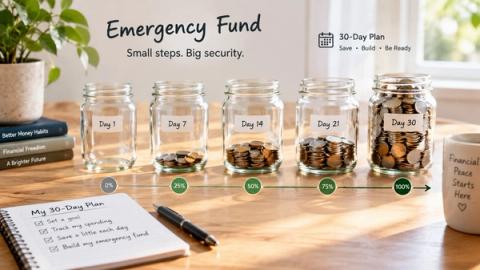
For emergency funds, though, that’s perfectly fine. The goal is not to beat the stock market. The goal is to cover the car repair, medical bill, or job gap without using a credit card.
How Falling Interest Rates Affect Your Savings
Falling interest rates usually reduce savings income.
Banks may lower savings account yields. New CDs may offer weaker rates. Money market accounts may become less rewarding. This can frustrate retirees, conservative savers, and anyone relying on interest income.
If rates appear likely to fall, locking in a CD can make sense for money you don’t need soon. The trade-off is access. CDs often charge early withdrawal penalties, so they work best for cash with a clear timeline.
Lower savings rates may also push people toward investments. That can be reasonable for long-term goals, but it can be risky for short-term money. A vacation fund, emergency fund, or house down payment should not swing wildly with the market.
What to Do When Interest Rates Change
Start by reviewing your debt. List each loan, its balance, its interest rate, and whether the rate is fixed or variable. Prioritize high-interest variable debt first, especially credit cards.
Next, compare savings options. Look at high-yield savings accounts, CDs, and money market accounts. Check fees, minimum balances, withdrawal rules, and deposit insurance. The FDIC explains deposit insurance clearly for bank accounts.
Then stress-test your budget. Ask what happens if a variable payment rises by $50, $100, or $300 per month. If that would create pressure, act early. Build a larger cash cushion. Pay down expensive debt. Avoid new obligations that only work under perfect conditions.
Finally, match each decision to your timeline. Short-term money needs safety. Medium-term money may benefit from CDs or conservative options. Long-term goals may require diversified investing.
The Bottom Line
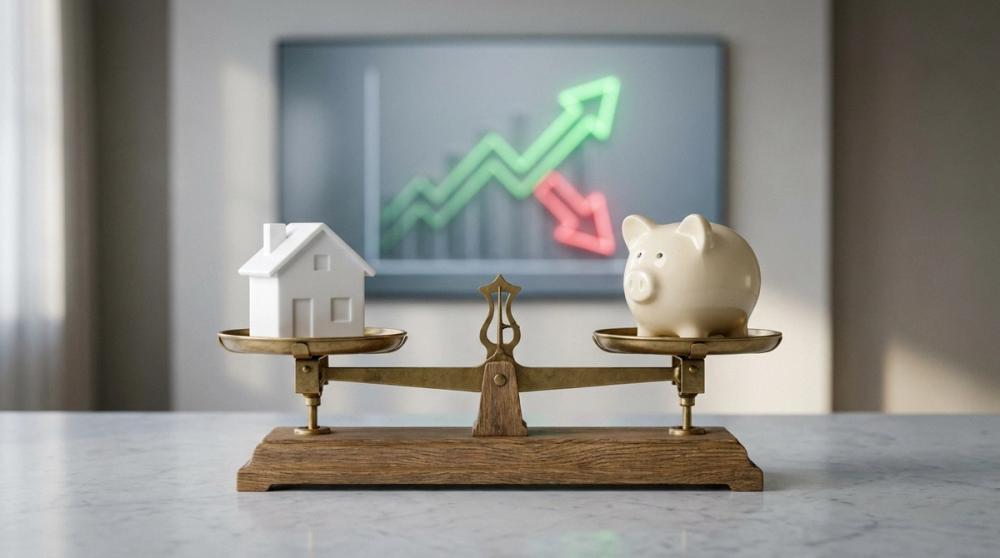
Interest rate changes affect your loans and savings in opposite ways. Higher rates usually make debt more expensive, but they can improve savings returns. Lower rates can make borrowing cheaper, but they often reduce what your cash earns.
The smartest response isn’t panic. It’s awareness. Know what you owe, know what you earn, and understand which rates can change. Once you see that clearly, interest rates stop feeling mysterious. They become another tool you can plan around.