
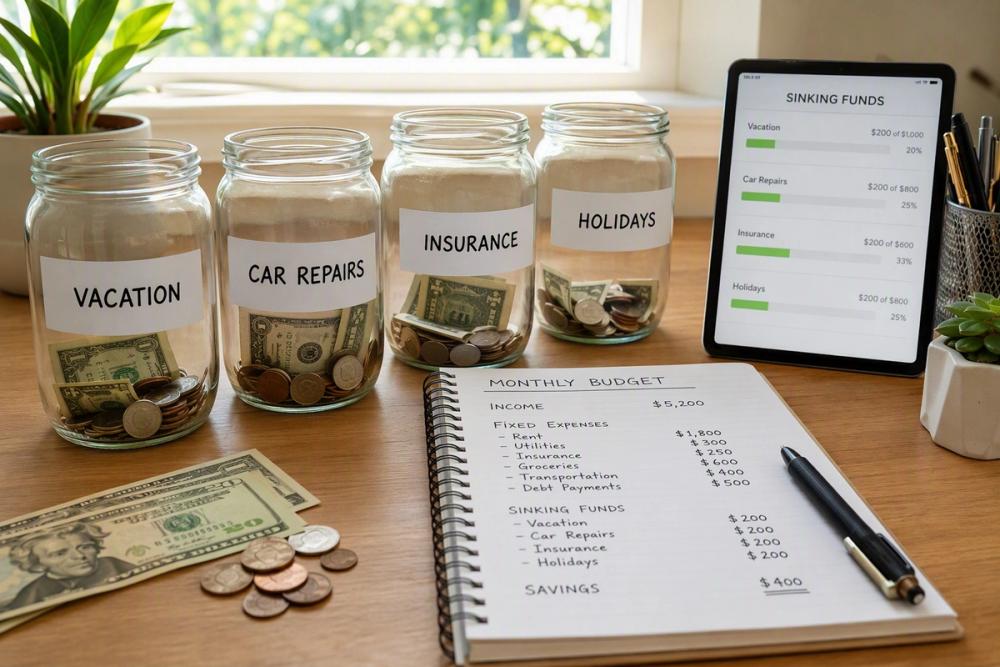
When a car repair, holiday, or insurance premium lands in a month that already feels tight, most people put it on a card or cut something else. Knowing how to use sinking fundsMoney set aside a little each month for a known irregular expense, so the bill arrives already paid for rather than as a crisis. to save for big expenses gives you another path: move small amounts aside on a schedule so the cash is there when the bill is due.
You do not need leftover money at the end of every month. You need a target and a date, plus a transfer that fits what you actually earn. You will know how to set those goals and fold them into a budget so the money stays out of everyday spending.
What Are Sinking Funds and Why They Matter for Big Expenses
Sinking funds are dedicated savings accounts for large, planned purchases or bills, such as a home renovation, annual insurance premium, or vehicle replacement. You contribute gradually so the expense is funded before it arrives, rather than relying on a credit card or draining checking.
A sinking fund differs from an emergency fundCash set aside in an accessible account to cover unexpected expenses or a loss of income without taking on debt., which protects against unexpected costs such as job loss, urgent repairs, or medical bills. A sinking fund has a named purpose and target amount; an emergency fund remains flexible.
For example, if a vehicle-repair goal is due in 12 months, saving one-twelfth of its cost each month makes the target manageable. That predictable contribution can reduce financial stress, support wealth building by avoiding interest-bearing debt, and help achieve milestones without borrowing. With limited income, list upcoming expenses, prioritize essentials, and automate affordable transfers after each payday. Even small amounts can fit alongside bills, debt payments, and emergency savings.
Setting Realistic Sinking Fund Goals on a Budget
Begin with the expense, desired purchase date, and expected price. Divide the price by the number of months remaining to set a monthly target; a $2,400 repair needed in eight months requires $300 per month. Compare that figure with take-home income after recording essential bills and discretionary spending. If only $220 is available, extend the timeline, lower the target, or trim expenses.
A car replacement costing $12,000 in 24 months requires $500 monthly; a $2,400 family vacation in 12 months needs $200. These amounts are affordable only if your spending record confirms the surplus. Review expenses and the fund monthly to catch overspending and adjust contributions promptly. Add an inflationThe general rise in prices over time, which steadily reduces what each dollar of savings can buy. cushion for costs likely to rise, then revisit the plan after a raise, move, new debt, or changed family needs. Automate a realistic transfer while leaving enough cash for essentials and emergencies.
Building and Managing a Sinking Fund Within Your Budget
Allocate a fixed percentage of monthly income before discretionary spending. A household bringing home $2,000 might direct 5% ($100) to a car-repair fund, while one earning $5,000 could assign 8% ($400) across holiday, insurance, and home-maintenance accounts. Choose a sustainable percentage; consistency matters more than starting large. Keep money in a high-yield savings accountA federally insured savings account paying a much higher rate than a typical bank account, with full access to your money., using labeled subaccounts when available, and monitor balances in a budgeting app that records contributions and growth.
Schedule an automatic transfer for payday to an account without a debit card. This limits temptation; keep a small buffer for minor surprises so you do not raid the fund for routine needs. Each quarter, compare the balance with the expense’s timing and revised cost. Increase, reduce, or redirect the percentage after checking cash flow, and change the transfer—not rent, debt payments, or essentials—so the overall budget remains stable.
Tips for Success and Avoiding Common Pitfalls
Set automatic transfer each payday and a calendar reminder to review balances monthly. Label an account “car repairs” or “insurance” so its purpose stays visible; celebrate milestones, such as reaching 50%, with a low-cost reward rather than withdrawing from the fund. If income falls, pause optional goals or reduce contributions temporarily, but preserve a small automatic deposit and never redirect essential-bill money. After an unexpected expense, replenish the fund by trimming discretionary spending and extending the deadline instead of using credit when possible. Keep near-term funds in an accessible, interest-bearing savings account; direct separate, long-term money toward retirement accounts, especially enough to capture an employer match. This separation protects planned expenses while retirement investments have time to compound. Review goals, due dates, balances, and transfers monthly and after major life or income changes. Increase contributions when a bill ends, and keep the plan visible until each target is funded.
Core insights
Learning how to use sinking funds to save for big expenses starts with choosing the expenses most likely to disrupt your budget. List upcoming annual, seasonal, or irregular costs, then prioritize the ones that are both predictable and difficult to cover from one month’s income. Start with one or two funds rather than trying to prepare for everything at once.
Next, turn each goal into a simple monthly contribution: subtract what you have already saved from the expected cost, divide the remainder by the months available, and automate that amount after payday. Keep sinking-fund money separate from everyday spending so it is available when needed.
Finally, review your funds regularly. Adjust contributions when expenses, income, or timelines change, and replenish a fund after using it. Consistent, manageable deposits matter more than starting with a large amount.