The longest bull marketA sustained stretch of rising prices, conventionally dated from a 20% recovery off the previous market low. in history lasted 4,494 days, stretching from March 2009 to February 2020. That record-breaking run reshaped retirement accounts, created generational wealth, and redefined what investors thought possible. But it wasn't the first time markets climbed for years on end, and it won't be the last.
Understanding how past bull markets started, what fueled them, and what finally ended them gives you a framework for recognizing where we stand today. The patterns repeat: economic recovery, technological breakthroughs, policy shifts, and eventually, excess. By examining five major bull runs from the 1920s to now, you'll see the conditions that create sustained gains and the warning signs that appear before they end.
The 1920s Bull Market (1921–1929)
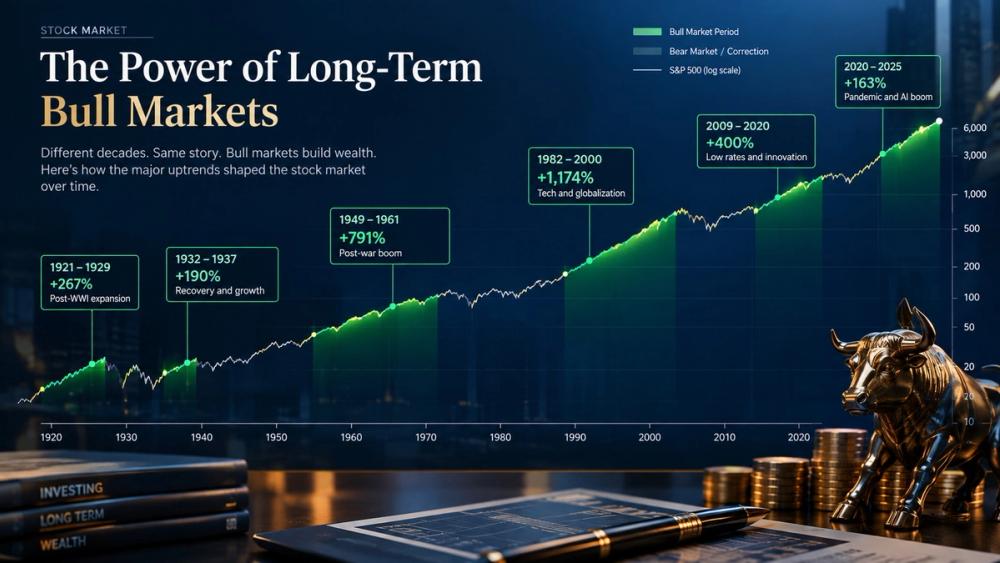
The 1920s bull market ran from August 1921 to September 1929, delivering approximately 500% gains over eight years. Post-World War I economic recovery created the foundation, as factories shifted from wartime to consumer production. Industrial expansion accelerated through the decade, with companies like General Motors and RCA driving stock valuations higher.
The widespread introduction of consumer credit allowed Americans to purchase automobiles, appliances, and stocks on margin for the first time. Technological innovations in manufacturing, radio broadcasting, and electricity distribution fueled investor optimism. Margin buying became common, with investors borrowing up to 90% of a stock's purchase price.
The run ended abruptly with the October 1929 crash, erasing gains and triggering the Great Depression.
The Post-War Expansion (1949–1956)
The bull market that began in June 1949 ran for seven years and delivered returns exceeding 260%, driven by forces reshaping the American economy after World War II. Millions of returning veterans entered the workforce, bought homes on GI Bill mortgages, and sparked a consumer spending surge that manufacturers raced to meet.
Suburbanization accelerated as developers built tract housing on farmland outside major cities, creating demand for automobiles, appliances, and household goods. Cold War tensions pushed defense spending higher, funneling government contracts into aerospace, electronics, and manufacturing sectors. The broader economy expanded steadily, with low unemployment and rising corporate profits supporting stock valuations.
The rally ended in 1956 when the Federal Reserve raised interest ratesThe percentage charged for borrowing money or paid for depositing it, quoted as an annual figure. to counter inflationThe general rise in prices over time, which steadily reduces what each dollar of savings can buy., cooling economic growth and sending the market into a correction.
The 1980s and 1990s Technology Boom (1982–2000)
The bull market from August 1982 to March 2000 lasted over 17 years and delivered a gain exceeding 1,400% in the S&P 500, making it one of the longest sustained rallies in market history. The run began after Federal Reserve Chair Paul Volcker brought inflation under control by raising interest rates to record levels in the early 1980s, then cutting them as inflation fell. Technology drove much of the expansion. Personal computers, the internet, and software companies transformed the economy and created new industries. Globalization and productivity gains from technology allowed companies to grow earnings while keeping costs down. The rally ended abruptly when the dot-com bubble burst in March 2000, erasing trillions in market value as unprofitable internet companies collapsed.
The Post-Financial Crisis Bull Market (2009–2020)
Starting in March 2009 and lasting 11 years until March 2020, this became the longest bull market in U.S. history by duration. The S&P 500 climbed over 400% during this period, recovering from the financial crisis lows and reaching record highs.
The Federal Reserve's unprecedented stimulus drove much of this growth. The central bank kept interest rates near zero for years and purchased billions in bonds through quantitative easing. These policies made borrowing cheap for businesses and pushed investors toward stocks for returns.
Corporate earnings grew steadily as companies recovered and then thrived. Technology giants like Apple, Amazon, and Microsoft expanded their dominance, eventually accounting for a larger share of market value than entire sectors. The unemployment rate dropped from 10% to historic lows.
The bull market ended abruptly when COVID-19 triggered a global economic shutdown in March 2020.
The Current Bull Market (2020–Present)
The current bull market began in March 2020, rising from the pandemic-induced crash that saw the S&P 500 drop 34% in just over a month. What followed was one of the fastest recoveries in market history, fueled by unprecedented fiscal stimulus, Federal Reserve intervention, and rapid vaccine development.
By early 2022, the S&P 500 had gained more than 100% from its March 2020 low. After a bear marketA decline of 20% or more from a recent market high, and the stretch of falling prices that follows it. correction in 2022, the index resumed climbing in late 2022 and continued through 2024, driven by artificial intelligence optimism, resilient corporate earnings, and tech sector strength.
This run already ranks among history's most powerful in terms of speed and magnitude. Where it ultimately lands on the list of longest bull markets remains uncertain, as the rally continues to unfold.
What the longest bull markets teach investors
The longest bull market in history by duration ran from 2009 to 2020, lasting 11 years and delivering gains over 400%. But duration alone doesn't tell the full story. The 1982–2000 run produced larger percentage returns, and the 1920s boom reshaped the economy in less than a decade. Each major bull market emerged from crisis or structural change and ended when valuations stretched too far or external shocks arrived. If you're investing during a bull market, study what ended previous ones. Recognize that expansions don't last forever, but they have historically rewarded patient investors who stayed disciplined through volatility and avoided chasing late-stage euphoria.