Sending money used to mean a check or a bank visit. Now it takes a tap. Speed is no longer the hard part. Recourse is.
Digital payments are on track to move more than $37 trillion worldwide in 2026. Technical security and scam liability get treated as one problem. They are not. Encryption can protect your card number and still leave you unpaid after a marketplace scam.
The most secure fintech apps for digital payments lock down card data at the device and make it clear when a transfer cannot be undone. Here is how Apple Pay, PayPal, Cash App, Zelle, and Wise actually compare.
What Makes a Fintech App Secure for Digital Payments
A secure payment app is a stack, not a logo.
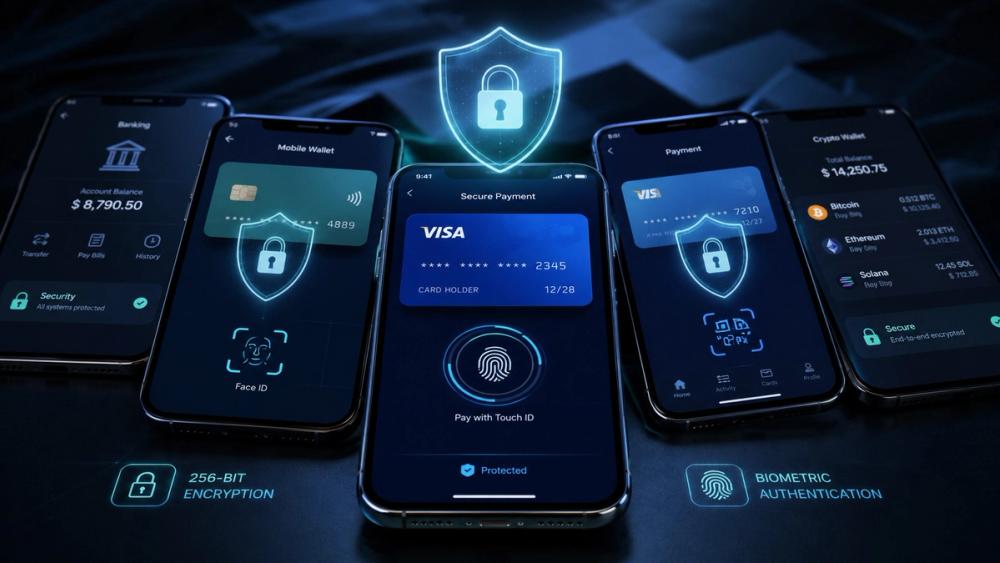
Tokenization replaces your real card number with a device-specific token. If a merchant is breached, the stolen data is useless. Visa has reported that tokenized transactions carry roughly 50% lower fraud rates than non-tokenized ones. Device biometrics prove you are physically present. Encryption in transit and at rest is expected under PCI DSS 4.0. Multi-factor authentication closes the gap when a password leaks.
Then there is reimbursement. An app can be cryptographically strong and still treat an authorized payment as final. Zelle inherits bank-grade login controls and offers no purchase protection. PayPal’s buyer protection is a product feature, not encryption. Those are different kinds of safety.
Apple Pay: The Most Secure Fintech App for Everyday Digital Payments
Apple Pay is the strongest option for in-store taps, in-app checkout, and Apple Cash to people you already know.
It never sends your actual card number to the merchant. A Device Account Number lives in the Secure Element. Biometric checks run inside the Secure Enclave. Each tap generates a one-time cryptogram, which blocks replay attacks. Consumer Reports ranked Apple highest for privacy among major peer-to-peer tools, and Apple states it does not sell user data to third parties.
The limits are practical. Non-Apple users cannot receive Apple Cash. Apple Pay is the most secure fintech app for digital payments at the point of sale, not for paying a stranger for a couch.
PayPal: Purchase Protection Inside a Secure Fintech App
PayPal is the better choice when the other person is a seller, not a friend.
Funds sit in a wallet instead of moving straight into a bank account. Buyer protection on eligible goods-and-services payments is the practical security feature. Encryption cannot reverse a bad purchase. Merchant acceptance for online checkout remains unmatched.
Friends-and-family payments behave like cash. No buyer protection. Phishing emails that mimic PayPal are still a top account-takeover vector. Card-funded sends and some cross-border transfers carry fees.
Among the most secure fintech apps for digital payments, PayPal wins when the counterparty is a seller.
Cash App: High Safety Scores With a Wider Attack Surface
Consumer Reports rated Cash App high for safety alongside Apple Cash. PIN, biometrics, login notifications, and an optional Security Lock are built in.
The trade-off is feature sprawl. Stocks and bitcoin expand what a stolen login can reach. Instant deposits carry fees, and speed often means a thinner cooling-off window. Protection on goods is limited and handled case by case.
Cash App belongs among secure fintech apps for digital payments if you turn every lock on. The core rails are not the weak point. The extra products are.
Zelle: Bank-Grade Rails Without Purchase Protection
Zelle runs inside participating bank apps, inherits your bank’s login controls, and sends money in minutes with no fee.
That speed is the liability. Authorized payments are treated as final. Marketplace and imposter scams exploit this by design. Zelle has no buyer protection for goods or services.
Zelle is a secure pipe. It is a poor shield. Use it to split rent with a roommate. Do not use it because a stranger on Facebook Marketplace said it was safer.
Wise: A Secure Fintech App for Cross-Border Digital Payments
Wise is built for international transfers. It holds 65-plus regulatory licenses, keeps customer funds with partner banks, and does not lend those balances. Mid-market rates are not a security feature, but they keep people off informal channels that are less safe. Confirm the destination country in the app before you send.
How to Choose Among the Most Secure Fintech Apps for Digital Payments
Match the app to the job.
- Tap in stores or in apps: Apple Pay. Google Pay follows the same tokenization logic on Android.
- Buy from a person or small shop online: PayPal Goods and Services. Never Friends and Family.
- Send money to someone you already trust: Zelle through your bank app.
- Send money abroad: Wise.
- P2P plus investing on the side: Cash App, with every lock enabled.
Turn on two-factor authentication and biometrics. Confirm a new recipient on a second channel before the first send. Keep P2P wallet balances near zero. Freeze apps you no longer use. Treat “just send it on Zelle, it’s safer” from a stranger as the scam signal it is.
This is general information, not a recommendation to use any single provider.