You've seen the headlines. Maybe you've started doom-scrolling Bloomberg before bed. Maybe a parent called to ask if their 401(k)An employer-sponsored retirement account that lets you invest part of your paycheck before taxes, often with a matching contribution. is safe. Either way, something feels off — and you're trying to figure out if it's noise or signal.
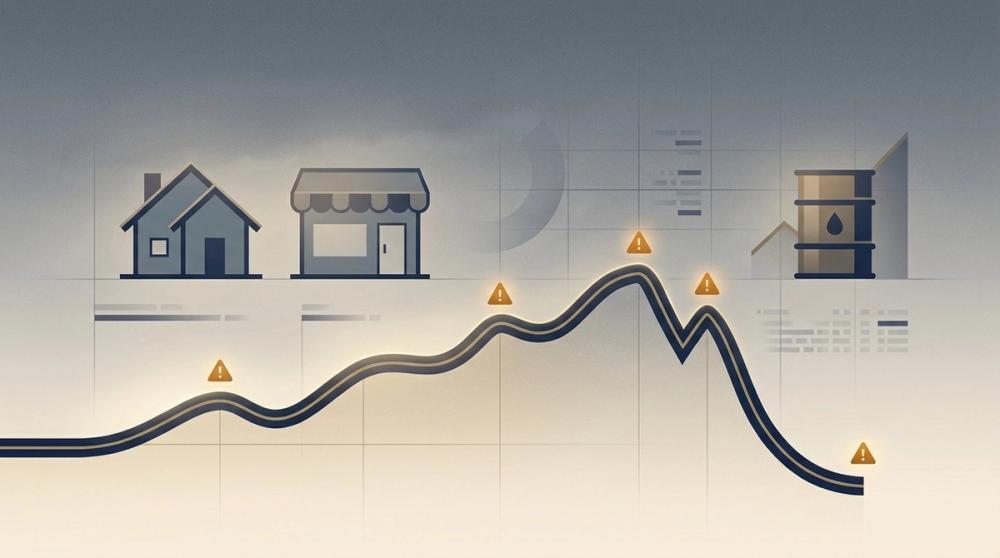
Here's where things actually stand in mid-2026. Goldman Sachs puts U.S. recession odds at around 30%. Moody's Analytics is closer to 49%. The Kalshi prediction markets are sitting near 39%. That's a wide range, and the honest takeaway is that nobody knows. But several economic dashboards are flashing yellow at the same time, and that's worth paying attention to.
Let's walk through what's actually showing up — and what you can do about it.
Five Warning Signs Flashing in 2026
1. The housing market is frozen
Sales are stuck. New construction has slowed. Foreclosures are creeping up. Mortgage rates have ticked down but not enough to thaw things. Economists are openly calling housing a sector already in its own recession. When the biggest asset most families own gets illiquid, it ripples — into spending, into mobility, into how secure people feel about everything else.
2. Companies stopped investing in the future
This one's quieter but maybe the most telling. Business capital expenditures grew about 3.9% by the end of 2025. During the pandemic recovery, that number hit 24%. Small business owners are reporting their lowest revenue and hiring expectations in years, per the Fed's Small Business Credit Survey. Banks are tightening lending standards. Translation: the people closest to the economy aren't betting on growth.
3. Stocks look expensive — and they're wobbling
The Shiller CAPE ratio and the Buffett Indicator are both hovering near historic highs. Meanwhile, the S&P 500 dropped more than 6% in March, and the Nasdaq slipped into correction territory. There's a real debate about whether the AI boom is the next dot-com. Even bullish analysts admit a 20–30% pullback wouldn't be a big deal by historical standards. Comforting? Not exactly.
4. Consumers are quietly straining
Credit card delinquencies are climbing. Demand for new credit is softening. And then there's oil — sitting above $100 amid Middle East tensions, dragging up gas, diesel, and jet fuel. That hits your grocery bill before it hits the headlines.
5. The Leading Economic Index keeps signaling caution
The Conference Board's LEI has been waving at us for a while. Its "3Ds" rule — depth, diffusion, and duration of declines — has historically been a reliable pre-recession alarm. Not a guarantee. But not nothing, either.
How to Actually Prepare (Without Panicking)
Look, recessions get predicted way more often than they arrive. The trick isn't calling the bottom. It's making sure your household is the one that doesn't get knocked over when the wind picks up.
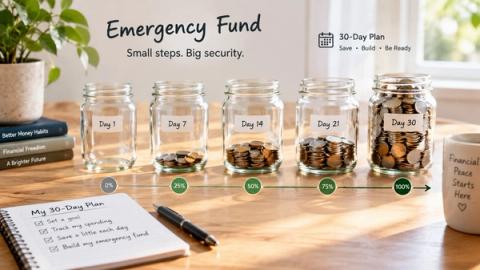
Build the emergency fundCash set aside in an accessible account to cover unexpected expenses or a loss of income without taking on debt. first. Three to six months of essential expenses, in a high-yield savings accountA federally insured savings account paying a much higher rate than a typical bank account, with full access to your money.. Boring. Effective. This is the single biggest thing standing between a job loss and a financial crisis.
Audit your debt before it audits you. Pay special attention to variable-rate balances — credit cards, HELOCsA revolving credit line secured by your home that you draw on as needed, usually at a variable rate., some private student loans. If rates stay high, those balances get more expensive every month you ignore them.
Stress-test your income. Ask the uncomfortable question: what happens if my paycheck stops for three months? For dual-income households, run the one-income version. Then do the small stuff now — refresh the resume, take the networking coffee, keep one skill genuinely sharp. Way easier to do this while employed than after a layoff.
Rethink risk. Don't abandon it. If a 30% market drop would force you to sell at the bottom, your allocation is probably too aggressive for your actual life. But sitting entirely in cash has a cost too. Investors who try to time exits historically miss the recovery's best days. Calibrate, don't capitulate.
Trim lifestyle creepThe tendency for spending to rise alongside income, so a raise improves how you live without improving your finances. where it doesn't hurt. Housing, transportation, subscriptions, food — that's where the real money lives. The $4 coffee isn't the problem. The unused gym membership and the second streaming service nobody watches? Maybe.
One Honest Caveat
A 2026 recession isn't certain. Plenty of forecasted downturns never showed up. There's a real cost to overcorrecting too — money parked in cash for years while everything else compounds is its own quiet loss. And nothing here is personalized financial advice. If you've got serious money at stake or a complicated situation, talk to a fiduciarySomeone legally obliged to act in your financial interest ahead of their own, rather than merely recommending something suitable. advisor who knows your full picture.
The goal isn't to predict the storm. It's to be the household that's ready either way.