
Life insurance sounds simple until you actually try to buy it.
Then suddenly you’re staring at words like term, whole lifePermanent life insurance that never expires and builds a cash value, at a premium many times that of comparable term coverage., cash value, conversion rider, death benefit, and tax-deferred growth. Not exactly dinner-table language. And underneath all of that jargon sits the real question: if something happened to you, would the people you love be financially okay?
That’s the point. Life insurance isn’t really about you. It’s about replacing your income, covering debts, protecting your family, and giving people breathing room during the worst week of their lives.
So when comparing term vs. whole life insurance, don’t start with the product. Start with the job you need it to do.
What Is Term Life Insurance?
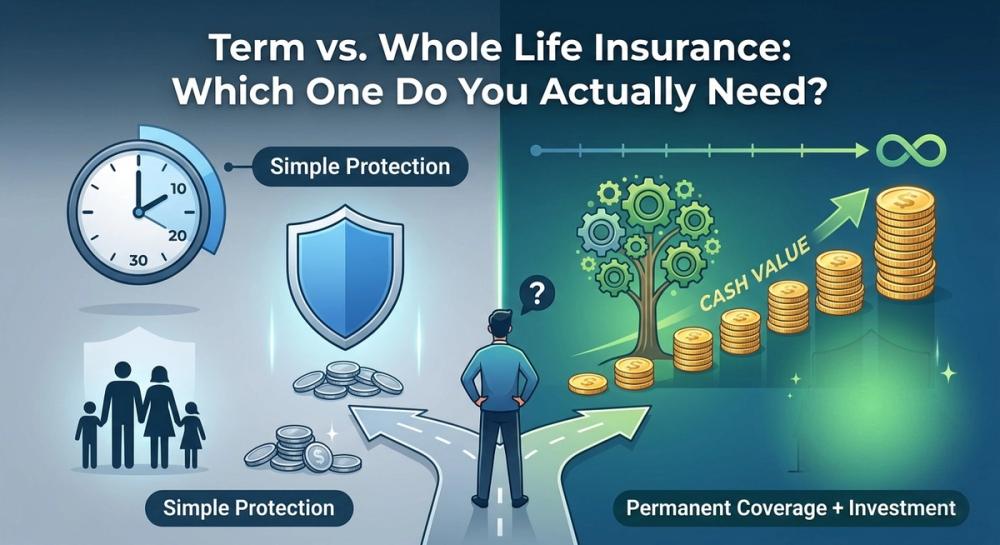
Term life insuranceLife insurance that covers a fixed number of years and pays out only if you die within them, which is why it is cheap. provides coverage for a set period, usually 10, 20, or 30 years. If you die during that term, your beneficiaries receive the death benefit. If you outlive the policy, coverage ends unless you renew or convert it.
Think of term life as temporary protection during your most financially vulnerable years.
That might mean the years when you have young kids, a mortgage, student loans, or a spouse who depends on your income. You’re not trying to insure every possible future expense forever. You’re trying to protect a specific window of risk.
Why People Choose Term Life Insurance
Term life is popular because it’s simple and usually affordable. You can often buy a large amount of coverage for a relatively low monthly premium, especially if you’re young and healthy.
It works well for:
- Parents with dependent children
- Homeowners with a mortgage
- Couples relying on one main income
- People with large debts
- Families that need strong protection on a budget
The trade-off is straightforward. Term life usually has no cash value. It’s pure insurance. If you outlive the term, there’s no payout.
That sounds frustrating at first. But honestly, that’s also how most insurance works. You don’t feel cheated if your house doesn’t burn down after paying homeowners insurance. The policy did its job by protecting you from a financial disaster.
What Is Whole Life Insurance?
Whole life insurance is a type of permanent life insurance. It lasts your entire life as long as you keep paying the premiums. It also includes a cash value component that grows over time.
That cash value can be borrowed against or withdrawn, depending on the policy. It may grow tax-deferred, which can make whole life appealing in certain financial plans.
Whole life insurance is more than basic protection. It combines lifelong coverage with a savings-like feature.
Why People Choose Whole Life Insurance
Whole life may make sense when someone needs coverage that does not expire. For example, a parent caring for a child with lifelong support needs may want permanent protection. A high-net-worth family may use whole life for estate liquidity or legacy planning. A business owner may use it as part of a succession strategy.
It can also appeal to people who value guarantees. Premiums are usually fixed, coverage lasts for life, and the policy can build cash value in a predictable way.
But here’s the catch: whole life costs much more than term life.
That higher premium can be worth it for the right person. It can also be a terrible fit if someone mainly needs affordable income protection.
Term vs. Whole Life Insurance: The Main Differences
The biggest difference between term life insurance vs. whole life insurance is duration.
Term life lasts for a specific period. Whole life lasts for life.
The second major difference is cost. Term life is usually far cheaper because it covers a limited period and does not build cash value. Whole life costs more because it offers permanent protection and funds the cash value account.
The third difference is flexibility. Term life gives you affordable coverage when your need is high. Whole life gives you long-term guarantees and potential access to cash value.
Neither is automatically better. They solve different problems.
A clean way to think about it is this:
- Term life protects temporary needs.
- Whole life supports permanent needs.
That distinction clears up a lot of confusion.
When Term Life Insurance Usually Makes More Sense
For most families, term life insurance is the better starting point.
Why? Because most life insurance needs are temporary. Your children won’t depend on your income forever. Your mortgage should eventually shrink. Your retirement savings should grow. Over time, your need for life insurance may decrease.
Term life works especially well when you need the largest possible death benefit for the lowest reasonable cost. A young family might need $500,000 or $1 million of coverage. Buying that much whole life could strain the budget. Buying term life may be realistic.
And this matters more than people admit: a policy only helps if you can keep it.
An expensive policy that lapses because the premiums became unbearable is not a financial plan. It’s a lesson with paperwork.
When Whole Life Insurance May Make More Sense
Whole life insurance can make sense when the need for coverage is permanent.
That may include final expenses, estate planning, lifelong dependent care, or long-term wealth transfer. It may also fit someone with strong cash flow who already funds retirement accounts, maintains emergency savingsCash set aside in an accessible account to cover unexpected expenses or a loss of income without taking on debt., manages debt, and wants another conservative planning tool.
Whole life can also help people who want structure. Some people like the forced discipline of fixed premiums and gradual cash value growth. Behavior matters in finance. The “best” strategy on paper often fails if real humans don’t follow it.
Still, whole life should be purchased carefully. Cash value is not the same as a checking account. Policy loans charge interest. Withdrawals may reduce benefits. Surrendering a policy early can create costs.
In plain English: don’t buy whole life unless you understand it.
Which Is Better: Term or Whole Life Insurance?
For most people asking “which is better, term or whole life insurance?”, the honest answer is: term life is usually the better first choice.
It gives you the protection your family needs during the years they need it most. It’s easier to understand. It’s usually much more affordable.
Whole life is not bad. It’s just more specific. It can be useful when you need permanent coverage or advanced planning beyond basic family protection.
The better question is not “Which product is superior?”
The better question is: What financial problem am I trying to solve?
If the problem is replacing income for 20 or 30 years, term life probably fits. If the problem is creating lifelong coverage or estate liquidity, whole life may deserve a closer look.
How to Decide What You Actually Need
Start with a simple calculation.
Ask yourself:
- Who depends on my income?
- How long would they need support?
- What debts would remain if I died?
- How much would my family need for housing, childcare, education, and daily life?
- What savings or existing coverage do I already have?
- Can I afford this premium for the long haul?
Then match the policy to the risk.
A 30-year mortgage may pair well with a 30-year term policy. Young children may justify a 20-year term policy. A lifelong dependent may require permanent coverage. Estate planning may require whole life or another permanent policy.
Also, check whether a term policy includes a conversion option. Some term policies let you convert to permanent insurance later without a new medical exam. That can be valuable if your health changes.
For more consumer guidance, resources from the NAIC, FINRA, and the Consumer Financial Protection Bureau offer helpful background.
Final Verdict: Term vs. Whole Life Insurance
If you need affordable protection for your family during your working years, term life insurance is probably the right place to start.
If you need lifelong coverage, have permanent financial obligations, or want a policy tied to estate planning, whole life insurance may be appropriate.
The best life insurance policy isn’t the one with the most features. It’s the one that solves the real problem, fits your budget, and stays in force when your family needs it most.