The ads make it look easy. A laptop on a beach, numbers ticking up, somebody who looks suspiciously well-rested. The reality of forex trading is closer to learning to fly a plane while the engine's already running. It's curiosity mixed with a little intimidation, and a quiet worry about who you can actually trust.
So let's cut through it. Here's what forex trading is, how a trade actually works, and the handful of things that separate the people who last from the people who blow up an account in a month. One honest thing up front: most beginners lose money at first. Pretending otherwise helps no one.
What Forex Trading Actually Is
At its core, forex trading is simple. You're swapping one currency for another and betting on which way the exchange rate moves. That's it.
What makes it different is the scale. The currency market is the largest and most liquid in the world, open 24 hours a day, five days a week, following the sun from Sydney to Tokyo to London to New York. That liquidity is great — you can get in and out easily. But it cuts both ways. The market keeps moving while you sleep, and it doesn't care that your alarm hasn't gone off.
It also helps to know who's on the other side of your trade: major banks, hedge funds, corporations hedging real business, and a lot of very fast algorithms. As a beginner, you're the smallest fish in a very big pond. That's not a reason to quit. It's a reason to be humble.
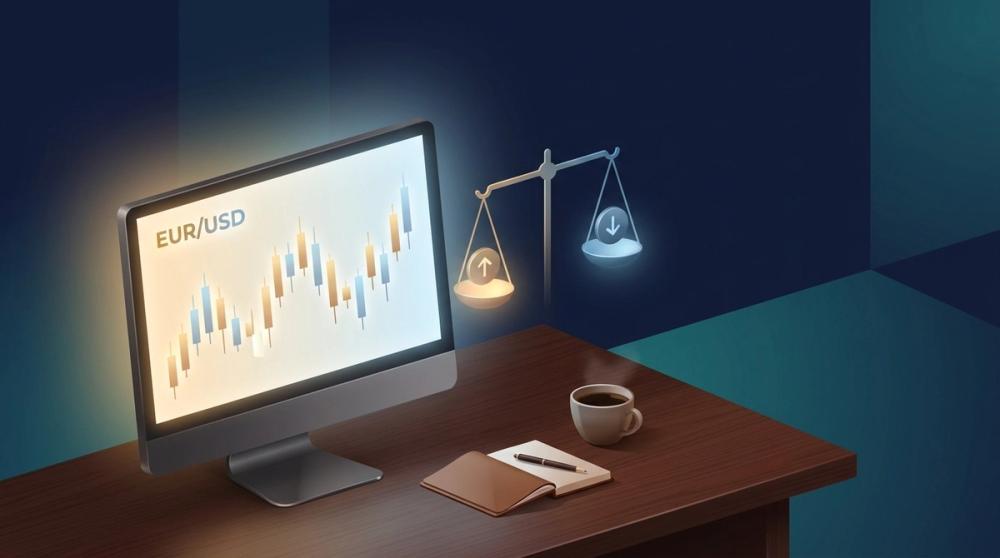
Currencies trade in pairs — a base currency and a quote currency. Beginners should stick to the "majors" like EUR/USD, USD/JPY, and GBP/USD. They're liquid, well-behaved, and cheaper to trade than the exotic pairs.
How a Forex Trade Actually Works
Here's the part that trips people up, explained plainly. You can profit whether a currency goes up or down. Going "long" means you expect it to rise; going "short" means you expect it to fall. That's a different mental model from buying a stock and crossing your fingers.
A "pip" is the standard unit of price movement — it's how you measure a gain or loss. Trades come in "lots," and beginners should start with micro lots. That's a feature, not a limitation. Small size keeps your mistakes cheap while you're still making them.
Then there's the spread: the gap between the buy and sell price. That gap is the broker's cut, and it means every trade starts slightly in the red. Trade constantly and those small costs pile up fast. It's one quiet reason overtrading drains accounts.
Leverage and Margin: The Part That Actually Matters
If you read one section twice, make it this one.
Leverage lets you control a large position with a small deposit, called margin. Sounds great. The catch is the asymmetry — leverage multiplies your losses by exactly the same amount it multiplies your gains. At 1:30 leverage, a small move against you can wipe out a big chunk of your money. And if it goes far enough, the broker closes your position for you, whether you're ready or not.
Here's the mindset shift that separates professionals from beginners. Pros treat leverage as risk to be rationed. Beginners treat it as opportunity to be maximized. That inversion is the whole game. There's a reason regulators around the world cap how much leverage retail traders can use — unrestricted leverage quietly destroyed a lot of accounts.
The Risks Beginners Underestimate
Brokers in regulated markets are legally required to tell you something blunt: the majority of retail trading accounts lose money. Take that as information, not discouragement.
Why do they lose? Usually the same handful of reasons. Too much leverage. No stop-loss and no rule for how much to risk. And emotion — chasing losses with bigger bets, cutting winners early while letting losers run. The market itself is neutral. More often than not, the thing that beats you is your own reaction to it.
Getting Started in Forex the Right Way
A few things, in order.
First, the broker. The non-negotiable here is regulation. Look for oversight from a recognized authority like the FCA, ASIC, or your local equivalent. That's your main protection if something goes sideways. Compare spreads, commissions, and overnight fees too — the cheapest-looking option isn't always the cheapest once you total it up.
Second, open a demo account and trade fake money until your process is boring and repeatable. It's free, and it's the single best move a beginner can make.
Then build a simple framework before you risk a cent: never put more than 1–2% of your account on a single trade, always set a stop-loss, and keep a journal so you can spot your own patterns.
The Honest Takeaway
Forex isn't a scam, and it isn't a shortcut. It's a real skill with real risk attached. Early on, your goal isn't profit — it's not blowing up while you learn.
So here's your one next step: open a demo account this week, pick a single major pair, and practice the 1–2% rule until it's second nature. Start there.
This article is educational and not personalized financial advice. When real money's on the line, talking to a licensed professional is never a bad call.