There's a frustrating catch buried inside the American credit system: you need credit to get credit. It sounds circular because it is. But here's what most financial guides won't tell you upfront — starting from zero is not the same as starting from behind. In fact, a blank credit file is easier to work with than a damaged one.
If you've never had a credit card, never taken out a loan, or recently moved to the United States, you're likely what the Consumer Financial Protection Bureau calls "credit invisible." An estimated 45 million Americans share that status. No score, no file, no history — but also no baggage. The path forward is clearer than you might think.
What "No Credit" Actually Means
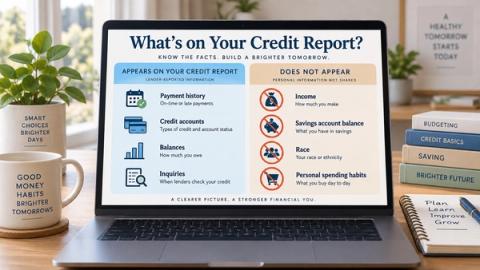
When a lender pulls your credit report and finds nothing, they don't see a red flag. They see a blank page. That's meaningfully different from seeing late payments, collections, or charge-offs.
Bad credit means you've made mistakes lenders can measure. No credit simply means you haven't interacted with the system yet. The tools you'd use to repair bad credit are very different from the ones you'll use to build credit from scratch — and reaching for the wrong one costs you time you don't need to lose.
How a Credit Score Is Actually Built
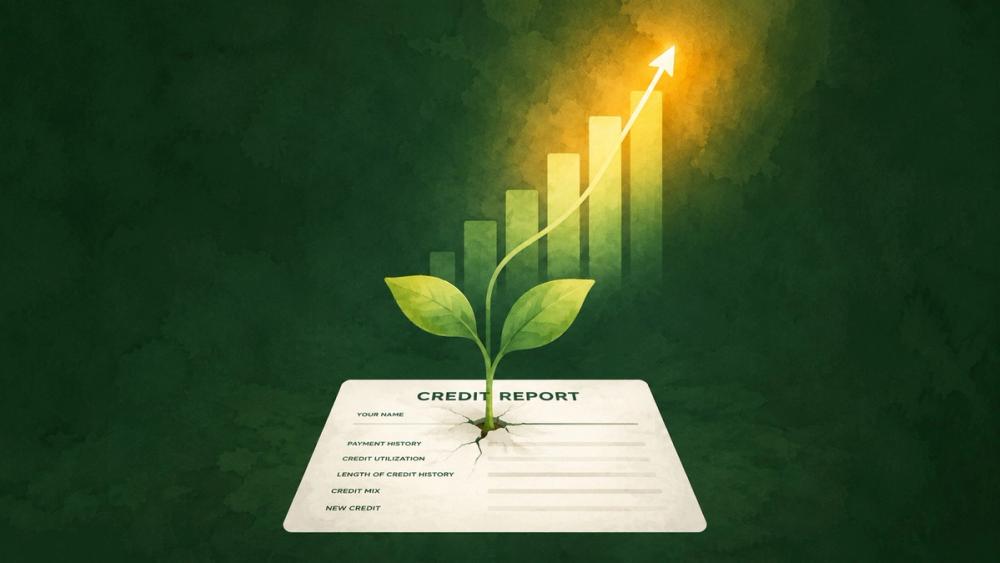
Your FICO scoreThe credit scoring model used in the large majority of US lending decisions, ranging from 300 to 850. is calculated from five weighted factors. Understanding them helps you direct your energy where it counts most.
- Payment history (35%) — Paying on time, every time, is the single most powerful lever you have. One missed payment on a thin file can set you back months.
- Credit utilizationThe share of your available revolving credit you are currently using — one of the largest single inputs to a credit score. (30%) — This is the ratio of your balance to your total available credit limit. Keeping it below 10% is the target. If your card has a $300 limit, aim to carry no more than $30 when your monthly statement closes.
- Length of credit history (15%) — The older your oldest open account, the better. This is exactly why opening your first account early — and keeping it open — carries lasting value.
- Credit mix (10%) — Lenders reward borrowers who can manage different types of credit responsibly, such as a revolving card alongside an installment loan.
- New inquiries (10%) — Each hard inquiryA lender's review of your credit report when you apply for credit — recorded on the report and worth a few points for about a year. creates a small but real dip. Space your applications out, especially while your file is new and thin.
Three Tools Built for People Starting From Zero
The broader credit system wasn't designed with beginners in mind. But a few specific products were.
Secured Credit Cards
A secured cardA credit card backed by a refundable cash deposit that sets your limit, used to build or rebuild a credit history. functions exactly like a standard credit card with one key difference — you put down a refundable cash deposit that becomes your credit limit. Use it for small, predictable purchases, pay the balance in full each month, and the issuer reports that positive behavior to all three major bureaus: Equifax, Experian, and TransUnion.
Not all secured cards are equal. Look for one with no monthly maintenance fees, reporting to all three bureaus, and a clear upgrade path to an unsecured card once your score improves. The Discover it® Secured Card and the Capital One Platinum Secured are frequently recommended starting points. Avoid any card that charges monthly fees on top of your deposit — those fees quietly erode the value of the account before you've built anything.
Credit-Builder Loans
These exist specifically for people with no credit history. Here's how they work: the lender holds the loan amount in a locked savings account while you make fixed monthly payments. Those payments get reported to the bureaus. At the end of the term, the full amount is released to you. You're building savings and a credit file simultaneously from a single product.
Credit unions and online lenders like Self (formerly Self Lender) offer these. They pair well with a secured card because they add an installment account to your file, which improves your credit mix.
Becoming an Authorized User
If a parent, spouse, or trusted friend adds you to their existing credit card account, a portion of their history on that card becomes part of your credit file. You don't need to use the card or even carry it. Their years of on-time payments and low utilization can give your thin file a meaningful early boost.
The risk is equally real — their habits affect your score directly. Go this route only with someone who pays on time without fail and keeps their balances well below their limits.
Daily Habits That Actually Move the Number
The right tool opens the door. Consistent habits determine how fast you walk through it.
Set up autopay for at least the minimum payment on every account so human error can't undo your progress. Never miss a payment during your first year — your file is at its most sensitive, and a single late payment carries disproportionate weight when there's little else in the report to balance it.
Keep your first account open even after you qualify for something better. Closing it shortens your average account age and permanently removes your oldest positive history.
Don't stack credit applications. Applying for three cards in the same month signals financial stress to lenders and layers hard inquiries onto a file that can't absorb them yet.
What a Realistic Timeline Looks Like
- Months 1–3: Your file is being established. No FICO score exists yet.
- Months 3–6: Your first score typically surfaces, often between 580 and 650.
- Month 12+: Consistent, on-time behavior commonly pushes scores into the 670–720 range — the low end of "good" credit territory.
- Year 2 and beyond: You begin qualifying for rewards cards, competitive interest ratesThe percentage charged for borrowing money or paid for depositing it, quoted as an annual figure., and meaningfully higher credit limits.
Building credit from absolute zero isn't complicated. It's patient. Pick one tool, use it correctly, pay on time every month, and let the timeline do its work. The system rewards consistency above everything else.