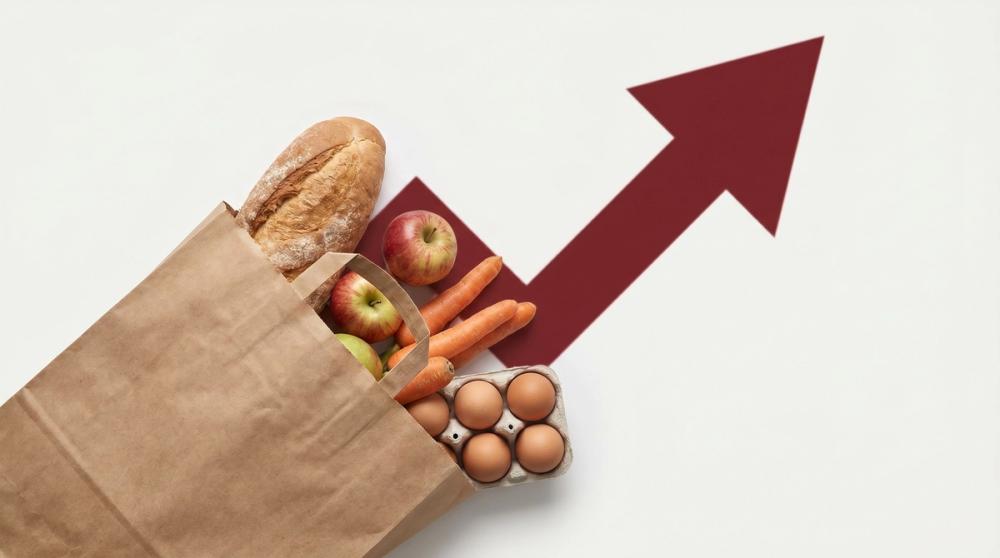
You walk into the grocery store for the usual stuff. Bread, eggs, some chicken, a few vegetables. Nothing fancy. And then you get to the register and just… stare at the total for a second too long.
It didn't used to be this much. You're sure of it.
You're not imagining things and you're not bad at budgeting. Grocery prices really have climbed — steadily, stubbornly, and in ways that the news doesn't always explain clearly. So let's actually break it down.
What Inflation Really Means (Without the Textbook)
InflationThe general rise in prices over time, which steadily reduces what each dollar of savings can buy. is just prices going up over time. That's it. When inflation is running hot, the same dollar buys you less than it did a year ago — fewer groceries, less gas, a smaller portion of your rent.
Economists measure this through something called the Consumer Price Index, or CPI. It tracks the average cost of a "basket" of everyday goods — food, housing, transportation, and so on. When that basket gets more expensive, inflation is rising.
Here's the thing though: the CPI is an average across millions of households. Your personal inflation rate depends entirely on what you actually buy. And if food and gas take up a big chunk of your budget — which they do for most people — you're feeling it harder than the headline number suggests.
Why Your Grocery Bill Specifically Keeps Climbing
This is where it gets interesting. Food inflation isn't caused by one thing. It's a pile-up.
Supply chains are still stressed. The chaos from 2020–2022 didn't just disappear. Global shipping routes, port delays, and supplier shortages reshuffled the entire food logistics system. Some of that has stabilized but the cost increases baked in along the way? Those stuck around. Energy prices drive everything. This one catches people off guard. Think about every step food takes before it reaches your cart: tractors run on fuel, processing plants use electricity, refrigerated trucks burn diesel, and the packaging itself is made from petroleum-based plastics. When energy gets expensive, food gets expensive. It's almost mechanical. Labor costs have gone up. Farm workers, warehouse staff, delivery drivers, grocery store employees — wages have risen across that entire chain since 2021. That's genuinely good for workers. But food companies pass those costs along. That's just how the math works. Weather has been brutal. Droughts in key growing regions, unexpected frosts, flooding — climate disruption has hammered crop yields globally in the past few years. Olive oil prices spiked dramatically after poor harvests in southern Europe. Orange juice costs shot up after disease devastated Florida's citrus crop. These aren't abstract statistics. They're on your receipt. And then there's "greedflation." This one's contested among economists, but the basic argument is that some large food corporations used inflation as cover to raise prices beyond what their actual cost increases justified — and expanded their profit margins in the process. It's not a clean villain story and the evidence is mixed. But it's worth knowing the debate exists.Why It Feels Even Worse Than the Numbers Say
Here's something that doesn't get talked about enough: shrinkflation.
You didn't imagine that your favorite cereal box got lighter. Or that the chip bag is somehow the same price but now contains approximately eleven chips. Manufacturers quietly shrink package sizes rather than raise the sticker price — because psychologically, a higher number feels more offensive than a smaller bag.
Combined with the fact that grocery shopping is something most of us do every single week, the price increases are impossible to ignore. Unlike, say, a rent increase you mentally absorb once a year, the grocery store reminds you every few days that things cost more now.
A Few Things You Can Actually Do
You can't fix inflation. But you can adapt to it without completely overhauling your life.
- Switch to store brands on staples. For flour, canned goods, butter, and pasta, the quality difference is minimal and the savings are real.
- Shop by unit price, not sticker price. That "sale" item isn't always cheaper per ounce. The little shelf tag with the unit price is your best friend.
- Lean into seasonal produce. Strawberries in January are expensive because they traveled far. Strawberries in June are cheap because they didn't.
- Cut food waste first. The average household wastes around 30% of the food it buys. Meal planning — even loosely — is one of the most effective ways to stretch a grocery budget without eating worse.
Will Prices Ever Come Back Down?
Honestly? Some will soften. Most won't fully reverse.
When central banks like the Federal Reserve raise interest ratesThe percentage charged for borrowing money or paid for depositing it, quoted as an annual figure., they're trying to slow the economy enough to cool inflation. It works — eventually. But "inflation slowing down" means prices are rising more slowly, not that they're dropping back to 2019 levels. That ship has largely sailed.
The more useful frame: some categories are showing relief. Certain proteins, cooking oils, and grains have eased from their peaks. Others — especially anything energy-intensive or climate-vulnerable — remain elevated.
Understanding why your grocery bill is what it is doesn't make it smaller. But it does help you stop blaming yourself and start making smarter choices about where to push back.
And honestly? That's a decent place to start.