
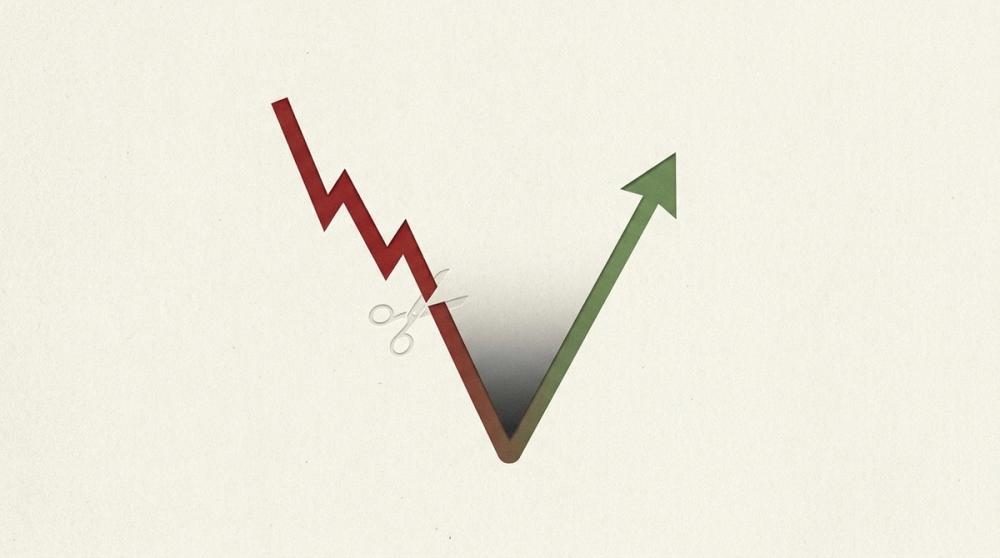
You open your brokerage app, scroll past the winners, and there it is. The holding that's down 30%. Your stomach drops a little, and your first instinct is to look away. But that red number isn't only a loss. Handled right, it's a tool that quietly trims your tax bill. That's the whole idea behind tax-loss harvestingDeliberately selling losing investments to realize losses that offset taxable gains and a limited amount of ordinary income., and once you see how it works you'll never look at a losing position the same way. Quick note before we dig in: this covers US taxable accounts and IRS rules, so specifics differ if you invest abroad.
What Tax-Loss Harvesting Actually Means
Strip away the jargon and it's simple. Tax-loss harvesting is selling an investment that's dropped below what you paid, on purpose, so the loss counts on your taxes. The IRS lets you subtract investment losses from investment gains. You only pay tax on what's left over. Picture a $5,000 gain on one stock and a $5,000 loss you harvest on another. They cancel out. Your taxable gain for that pair? Zero. The word "harvest" trips people up. You're not throwing away more money. You're capturing a loss that already happened so it finally does something useful. One catch worth saying early: the loss has to be real. You have to actually sell. A position that's down on paper does nothing for you until you lock it in.
How Tax-Loss Harvesting Saves You Money
The savings come in three layers, and most people hit them in this order.
- Offset your capital gainsThe profit from selling an asset for more than you paid, taxed at a lower rate if you held it longer than a year. first. Losses cancel gains dollar for dollar, with no cap. Short-term losses hit short-term gains, long-term against long-term. This matters more than it sounds, because short-term gains get taxed as ordinary income at your regular rate. Wiping those out is the most valuable move you can make.
- Knock $3,000 off your ordinary income. If your losses outrun your gains, you can deduct up to $3,000 of the leftover against your salary each year. That's real money against the income you actually live on.
- Carry the rest forward. Anything beyond that $3,000 doesn't vanish. It rolls into future tax years, forever, until you've used it all.
Here's how it plays out. Say you harvest $9,000 in losses this year and have no gains to offset. You deduct $3,000 from this year's taxable income, then carry the remaining $6,000 forward to chip away at next year and beyond. Think of it less as free money and more as smart timing. You're deferring tax, and sometimes shifting it into a year when your rate is lower.
The Wash-Sale Rule You Can't Ignore
Now the part that bites people. The wash-sale ruleAn IRS rule disallowing a capital loss if you buy a substantially identical security within 30 days before or after the sale. says you can't sell for the loss and then rebuy the same (or "substantially identical") security within 30 days before or after the sale. Break it, and the IRS simply voids your loss. All that work, gone. The rule exists for an obvious reason. Without it, you'd harvest a loss on Monday, rebuy Tuesday, and never actually change your position. There's a clean workaround, though. Swap into something similar but not identical. Sell one S&P 500 fund and buy a different provider's total-market fund. You stay invested, the market keeps moving for you, and the loss holds up. One trap to watch: a rebuy inside your IRA can trigger the rule too, so coordinate across every account you own.
When Tax-Loss Harvesting Is Worth It
It's not always worth the trouble, and honesty matters here. Harvesting makes sense when you're in a taxable brokerage account, you've got gains to offset, and you sit in a higher bracket where the deduction stretches further. Skip it inside a 401(k)An employer-sponsored retirement account that lets you invest part of your paycheck before taxes, often with a matching contribution., IRA, or Roth. Those accounts are already tax-sheltered, so there's no taxable gain to harvest in the first place. Watch the friction too. Trading costs, spreads, and the very real risk of selling right before a rebound can eat your savings. And remember the trade-off baked in: harvesting lowers your cost basisWhat you originally paid for an investment, adjusted over time — the figure your taxable gain or loss is measured against., so a bigger taxable gain may be waiting down the road. You're often deferring the bill, not erasing it.
How to Get Started
You don't need to be a tax pro to put this to work. Three moves get you going.
- Review your taxable holdings near year-end and flag anything sitting below what you paid.
- Line up a replacement security before you sell, so you dodge the wash-sale rule and stay invested.
- If hands-off is more your speed, robo-advisorsAn automated service that builds and maintains a diversified portfolio for you based on a short questionnaire, for a low annual fee. like Wealthfront and Betterment automate the whole thing.
That red number on your screen doesn't have to just sit there making you wince. Let it work, and it quietly cuts what you owe come April. One last thing: this isn't tax advice. Run your specific situation past a tax professional before you act.