
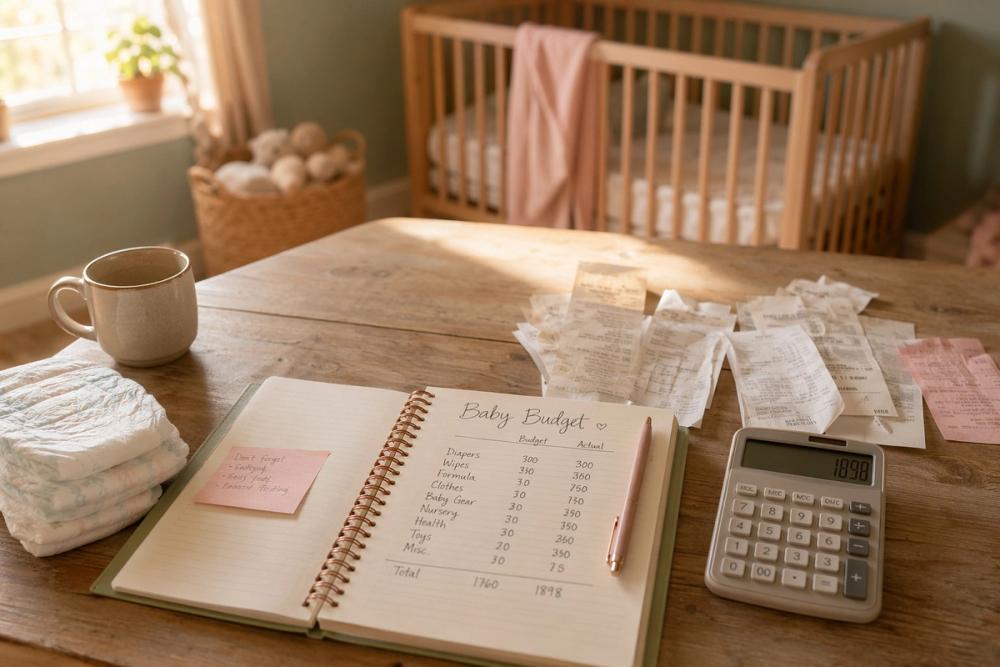
Most new parents do the responsible thing. They build the registry, compare strollers, read the reviews on car seats, and put together a nursery that looks like it belongs in a catalog. Then the hospital bill shows up. Or the daycare deposit. Or the moment three months in when they realize the "baby budget" they built never accounted for half of what a baby actually costs.
That gap between what you plan for and what you actually pay is where most of the stress lives. Here's what's usually hiding in it, and how to close it before it closes in on you.
The Costs Nobody Puts on the Registry
Delivery is the first surprise, even with good insurance. A deductible that resets in January can slam right into a due date in February, and suddenly you're paying full price for a hospital stay you thought was covered. Add a NICU stay, even a short one, and the bill can climb into five figures fast.
Then there's the care that comes after the baby does. Lactation consultants aren't always covered. A pump isn't automatically included in your plan. Pelvic floor therapy, which a lot of new parents need and even more don't know exists, is often an out-of-pocket line item nobody warned you about.
Before your due date, call your insurer and ask two things: has your deductible reset, and what does "covered" actually mean for delivery, NICU care, and postpartum recovery. That one call can save you from a bill you didn't see coming.
The Monthly Costs That Creep Up After You Bring Baby Home
The sticker shock isn't a single moment. It's monthly. Childcare alone can rival a mortgage payment depending on where you live, and the good centers often have waitlists that start before the baby's even born. Diapers, formula, and wipes are a quiet, constant drain that doesn't let up for years. Pediatrician visits and vaccines add up, and the first cold of daycare season usually turns into an urgent care visit.
And babies grow fast. The onesie that fit in March doesn't fit in June. Car seats, clothes, and gear turn over every few months, which means the spending doesn't stop once the nursery's built. It just changes shape.
The Costs That Don't Show Up on Any Checklist
Some of the biggest costs aren't things you buy. They're income you lose. Unpaid leave, reduced hours, or stepping back from work entirely all show up as a hit to your budget that no receipt captures.
Then there's the space you didn't know you'd need. A one-bedroom that worked fine for two suddenly feels impossible with a crib in the corner. A second car becomes necessary when one parent's schedule stops lining up with the other's. Insurance premiums often rise the moment a dependent gets added to the plan. And somewhere in the chaos, you start paying for things you used to just do yourself, like cleaning, meal prep, or a sitter so you can shower without an audience.
So How Much Should You Actually Set Aside?
There's no single number that fits every family, and anyone who gives you one is guessing. What matters more is the split: know which costs are fixed, like childcare and insurance, and which ones flex, like gear and extras. Fixed costs need to be in your monthly budget from day one. Flexible costs are where you find room to breathe when money's tight.
How to Prep Before the Baby Arrives
You can't predict every cost. You can prepare for the predictable ones.
Start a baby buffer fund now, aiming for three to six months of the new expenses you expect: childcare, diapers, the works. If you have access to an FSAAn employer account funded with pre-tax salary for medical or dependent care costs, which you generally must spend within the plan year. or HSAA tax-advantaged account paired with a high-deductible health plan, where contributions, growth, and medical withdrawals are all untaxed., max out your contributions before delivery, not after, so the money's there when you need it.
Buy secondhand where it makes sense. Clothes, swings, and bouncers are almost always fine used. Car seats and cribs aren't, since safety standards and recall history matter there. And start the monthly baby-fund line item in your budget before the due date, not after the first bill lands.
The goal was never to guess every cost perfectly. It's to stop getting blindsided by the ones you could have seen coming. Do that, and the rest of it, the sleepless nights, the milestones, the chaos, gets to be about the baby instead of the bill.