Bankruptcy can feel like a financial reset button with a long paper trail. But it doesn’t lock your credit report in place forever. You can improve your credit report after bankruptcy by checking for errors, building fresh positive payment history, and avoiding the costly shortcuts that tend to make a rough situation worse.
The work is mostly unglamorous. Review. Correct. Pay on time. Repeat. Still, those habits give lenders more recent information to weigh against an older bankruptcy filing.
Understand What Bankruptcy Changes on a Credit Report
A bankruptcy filing can remain visible for years, though its influence on lending decisions and credit scoresA three-digit number, typically 300 to 850, that lenders use to estimate how likely you are to repay borrowed money. can change as your report accumulates newer, positive information.
According to myFICO, Chapter 7 and Chapter 11 bankruptcies may remain on a credit report for up to 10 years from the filing date. Chapter 13 bankruptcies may remain for up to seven years.
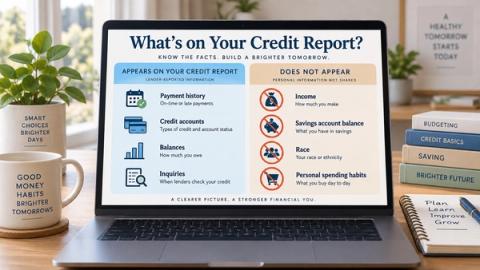
That public record is only one piece of the picture. Your report may also list credit cards, personal loans, medical accounts, or collections included in the bankruptcy. Those entries need to be reported correctly. An account discharged through bankruptcy should not appear as an active, unpaid debt with a balance you still owe.
And here’s the part people often miss: bankruptcy doesn’t create one fixed credit score. Payment history, revolving balances, account age, recent applications, and the types of credit you use still matter.
Review All Three Credit Reports After Bankruptcy
The first practical step is simple: see exactly what lenders can see.
Request reports from Equifax, Experian, and TransUnion through AnnualCreditReport.com, the authorized source for free credit reports. Don’t assume the three reports match. A creditor may report an account to one bureau, two bureaus, or all three. Details can differ too.
As you review each report, check:
- Personal details, including your name, address, and Social Security number variations
- Bankruptcy filing information, including the court and filing date
- Accounts included in the bankruptcy
- Reported balances and account status
- Late-payment history, collections, and hard inquiriesA lender's review of your credit report when you apply for credit — recorded on the report and worth a few points for about a year.
- Accounts you don’t recognize
Focus on accuracy, not perfection. A bankruptcy that was filed and reported correctly is negative information, but it isn’t an error. A credit card that shows an unpaid balance despite being discharged may be an error worth challenging.
Dispute Errors That Affect Your Credit Report After Bankruptcy
A dispute is for inaccurate reporting, not for making legitimate history disappear.
The Consumer Financial Protection Bureau explains that accurate negative information generally cannot be removed just because it hurts your credit. That includes a properly reported bankruptcy.
But inaccurate details can and should be challenged. Common post-bankruptcy problems include:
- A discharged account still showing a past-due balance
- The same debt reported twice under different account numbers
- An account marked as currently delinquent after discharge
- An incorrect bankruptcy filing date
- A collection account that does not belong to you
File a dispute with the credit reporting company that shows the error. The CFPB recommends explaining what is wrong, identifying the account clearly, and including copies of documents that support your position. Its dispute guidance and sample letters can help organize the request.
Keep records. Save the original report, the dispute, attachments, delivery confirmations, and every response. Think of it as building a small case file. Boring? Yes. Useful? Absolutely.
Rebuild Payment History One Due Date at a Time
The strongest credit-rebuilding tool after bankruptcy is a clean record of on-time payments.
A new account paid on time each month gives creditors current evidence that you can manage debt within your budget. A single late payment can work against that progress, especially when your post-bankruptcy credit file is still thin.
Set up a system that doesn’t rely on memory alone:
- Put every due date on one calendar
- Set account alerts several days before payment is due
- Use automatic payments for at least the required minimum
- Check your account balances before a payment drafts
Automatic payments work well only when the money is there. If income changes or a large expense hits, review the account before the due date. A late fee is irritating. A reported late payment is worse.
Use New Credit Carefully After Bankruptcy
Opening new accounts can help establish recent history, but only when you can manage them without strain.
A secured credit cardA credit card backed by a refundable cash deposit that sets your limit, used to build or rebuild a credit history. is often one option. You provide a refundable security deposit, then use the card like a standard credit card. Before applying, confirm that the issuer reports activity to the major credit bureaus. Use the card for a small planned expense, such as a phone bill or fuel purchase, then pay the statement balance by the due date.
Credit-builder loans can also create installment-payment history. Usually, the loan proceeds are held while you make scheduled payments. At the end of the term, the funds may be released to you. Read the fees, interest charges, and reporting policies before signing up.
Avoid opening multiple accounts just to speed things up. More applications may add hard inquiries and more accounts mean more bills to manage. Credit rebuilding isn’t a sprint. It’s closer to repairing a roof: one solid layer at a time.
Keep Balances Low and Applications Deliberate
Revolving credit utilizationThe share of your available revolving credit you are currently using — one of the largest single inputs to a credit score. is the portion of your available credit that shows as a balance. For example, a $300 reported balance on a card with a $1,000 limit equals 30% utilization.
A low reported balance can support a healthier credit profile. That does not mean you need to carry debt or pay interest. Use the card, let normal activity report when appropriate, and pay it off by the due date.
Also, resist the flood of “guaranteed approval” offers that may appear after bankruptcy. Read the terms. High fees, expensive interest, and tiny limits can trap you in a product that costs more than it helps.
Apply only when the account has a clear purpose and fits your monthly budget.
Avoid Credit Repair Promises That Sound Too Easy
Companies cannot legally erase accurate bankruptcy information from your report on demand.
Be cautious if a business promises a specific score increase, guarantees removal of a bankruptcy, or tells you not to contact credit bureaus yourself. The CFPB notes that accurate negative information generally remains until its reporting period expires.
You can dispute errors directly at no cost. Paid help may be appropriate in some complicated situations, but it should never depend on false promises or vague explanations.
FAQ
Can bankruptcy be removed from a credit report early?
Only inaccurate bankruptcy reporting can be disputed. A correctly reported bankruptcy generally remains for the applicable reporting period.
How soon can credit improve after bankruptcy?
Credit can begin improving as new accounts report on-time payments and manageable balances. The timeline varies because every credit report has different history and account activity.
Should discharged accounts show a balance?
Review the account details and bankruptcy paperwork. If the reported balance or status conflicts with the discharge, submit a dispute with supporting documentation.
Is a secured credit card a good way to rebuild credit?
It can be, provided the issuer reports to the major credit bureaus and you can pay the balance on time every month.
Conclusion: Improve Your Credit Report After Bankruptcy With Consistent Habits
To improve your credit report after bankruptcy, start with accurate reports and build forward from there. Check all three reports, dispute factual mistakes, pay every bill on time, keep card balances manageable, and take on new credit only when it serves a real purpose.
The bankruptcy may remain on your report for a while. But lenders also see what you’ve done since then. That newer record is where the rebuilding happens.
This material is general educational information, not legal, credit, or financial advice. For advice based on your circumstances, consider speaking with a qualified attorney, nonprofit credit counselor, or financial professional.