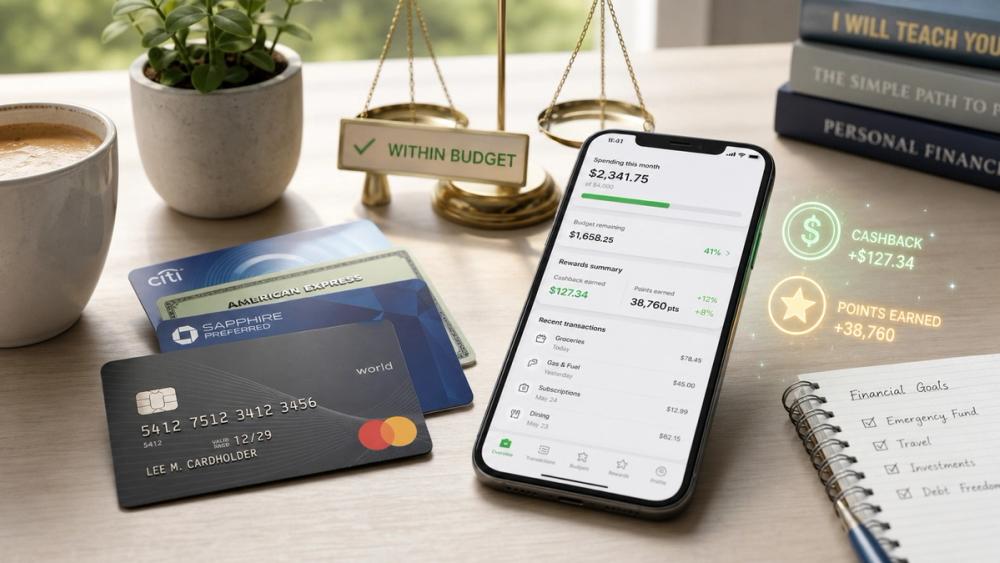
Most people leave money on the table with their credit cards. Others overspend chasing points and end up paying more in interest than they ever earn back. The difference comes down to one rule: treat rewards as a bonus on money you already planned to spend.
The average U.S. household carries about $6,000 in revolving credit card debt. At 20% interest that balance costs roughly $100 a month before you earn a single point. No rewards program can outrun that math. The goal is simple. Capture the highest possible return on spending that fits inside your existing budget and pay the balance in full every time.
Choose Cards That Match Your Real Spending
Start with your last three months of bank and credit card statements. Add up the totals in groceries, gas, dining, travel and online shopping. Those numbers tell you which type of card actually helps.
Flat-rate cards return 1.5% to 2% on every purchase. They work well if your spending is spread across many categories. Rotating-category cards pay 5% in selected areas for one quarter then drop back to 1%. Transferable-points cards shine when you travel often and can move points to airline or hotel partners at higher values.
Pick the card that covers your largest category first. A 5% grocery card saves real money if you spend $600 a month on food. A travel card with a big sign-up bonus looks attractive until you realize you rarely fly. Match the product to the spending you already do rather than the spending you hope to do.
Set Hard Limits Before You Track Points
Open a notes app or a simple spreadsheet. Write the monthly dollar limit for each reward category based on your normal budget. When you reach that number switch to a debit card or a no-rewards card for the rest of the month.
This step removes the quiet pressure that points create. You stop asking whether the extra purchase is “worth it” for the rewards. The limit is already set. The decision is already made.
Track the running total every few days. Most people find that the act of watching the number keeps spending inside the lines without constant willpower.
Pay the Statement Balance in Full
Interest is the silent killer of rewards. A $1,000 balance at 18% APRThe yearly cost of borrowing, expressed as a percentage that includes the interest rate plus most lender fees. costs $15 in the first month. Most cards return between 1% and 2% so you need $750 to $1,500 in new spending just to break even on that single month of interest.
Set up an automatic payment for the full statement balance one day before the due date. Keep a small cash cushion in checking so the payment never triggers an overdraftA bank service that covers transactions exceeding your balance, either by linking another account or by charging a fee to advance the money.. If you cannot pay the balance in full this month stop using the card for new purchases until the debt is gone.
Stack Cards Without Changing Your Habits
One strong rotating-category card plus one solid flat-rate card covers most households. Use the 5% card only in the elevated categories and only up to your pre-set limit. Run everything else on the flat-rate card.
Time larger planned purchases for the right quarter. If you need new tires or an annual software subscription and the category is elevated that month make the purchase then. Do not invent new needs just to hit a bonus category.
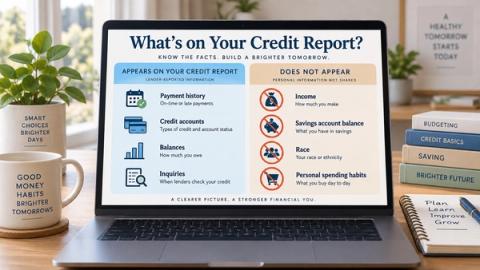
Avoid opening several cards in a short period if you plan to apply for a mortgage or auto loan soon. Multiple hard inquiriesA lender's review of your credit report when you apply for credit — recorded on the report and worth a few points for about a year. and new accounts can lower your score for months.
Redeem for Cash or High-Value Travel
Statement credits and direct deposits almost always give you the full face value of your points. Gift cards and merchandise rarely do. For travel cards transfer points only when the redemption rate reaches at least 1.5 cents per point. Anything lower is usually not worth the extra steps.
Ignore redemption offers that require you to spend more money or lock you into a specific product. The goal is to turn points into dollars you already planned to use not into new obligations.
Review the Numbers Every Three Months
Once a quarter add up the rewards you actually received. Subtract any annual fees and any interest you paid. If the net return drops below 1% after fees cancel the card or product-change it to a no-fee version.
Spending patterns shift. A card that made sense last year may no longer fit. Drop what no longer works and keep only the cards that still deliver a clear positive return.
The real test is simple. If every rewards program vanished tomorrow would your spending stay the same? If the answer is yes you are using the system correctly. If the answer is no the points have started to control the budget. Pull back until the spending returns to the levels you set before the cards entered the picture.
Rewards work best when they remain invisible. You spend the money you already planned to spend. You pay the balance every month. You collect the cash or travel value on the side. That approach turns credit cards into a quiet tool rather than an expensive hobby.