Most people wait until the end of the month to see what’s left for savings. By then the money is usually gone. Rent, groceries, subscriptions, and the random expenses that always appear leave the account near zero. The result feels familiar: another month with nothing set aside.
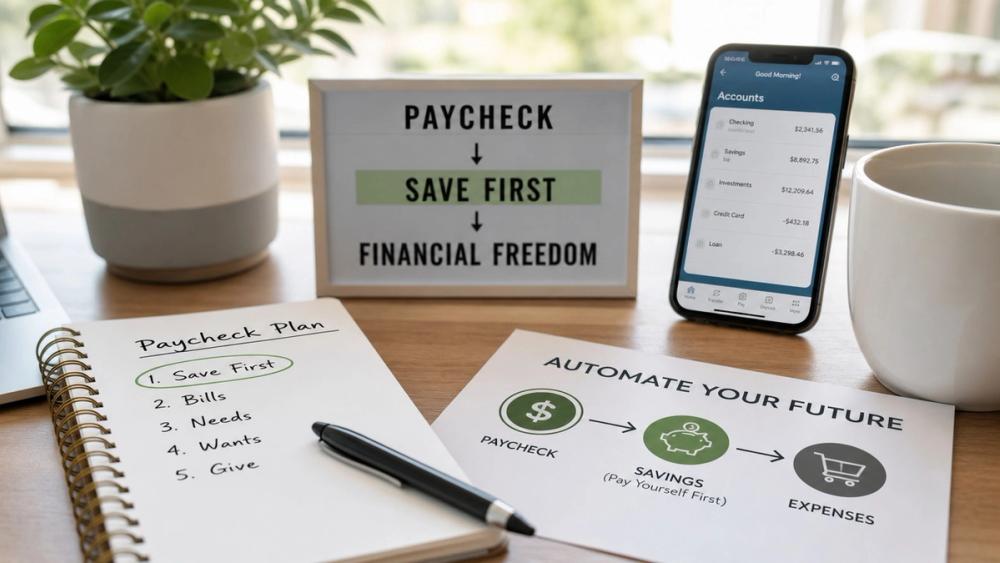
Pay yourself first reverses that order. The moment money arrives, a set amount moves into savings or investments before anything else gets spent. You treat the transfer like a bill you owe yourself. Once it leaves the checking account, the rest of the month runs on whatever remains.
This approach works because it removes the daily decision. Willpower fades fast when the cash sits in plain sight and feels available. Automation cuts that friction. The money disappears into a separate account before you can rationalize spending it.
What the Strategy Actually Looks Like
The core idea is simple. You decide on an amount or percentage—say 8% of every paycheck—and arrange for it to leave your main account automatically. The destination can be a high-yield savings accountA federally insured savings account paying a much higher rate than a typical bank account, with full access to your money. for an emergency fundCash set aside in an accessible account to cover unexpected expenses or a loss of income without taking on debt., a brokerage account for longer-term goals, or a retirement vehicle. The specific product matters less than the consistent priority.
People have used versions of this method for decades. The principle appears in older personal-finance writing because human behavior stays consistent: available money tends to get spent. Moving the savings first changes the default.
You don’t need a large starting sum. Even $40 or $50 per pay period builds the habit and the balance. The system scales later when income rises or expenses drop.
Why Automation Beats Relying on Motivation
Motivation works for a week or two. Then a busy stretch hits or an unexpected cost appears and the savings contribution gets skipped. Automatic transfers keep the deposits happening without requiring a fresh decision each time.
Once the money sits in a separate account, it stops feeling liquid. You’re less likely to dip into it for non-essentials. Over months the balance grows through simple consistency rather than bursts of discipline. Compound growthInterest earned on both your original money and the interest already added to it, which makes balances grow faster over time. starts to matter once the deposits become regular, even at modest levels.
The method also protects against lifestyle creepThe tendency for spending to rise alongside income, so a raise improves how you live without improving your finances.. When a raise arrives, the automatic percentage can increase before the extra income gets absorbed into higher spending.
Setting Up the System
Start by picking a realistic number. Look at your current take-home pay and fixed costs. Choose an amount you can sustain without constant stress. Many people begin at 5% and raise it later. Others prefer a fixed dollar figure that feels concrete.
Next choose the destination. An emergency fund usually comes first—three to six months of essential expenses in a liquid high-yield savings account. Once that buffer exists, later transfers can shift toward investments or specific goals such as a house down payment.
Then arrange the automation. Most banks let you schedule a recurring transfer for the day after payday. Some employers allow you to split the direct deposit so a portion goes straight into a separate account. Apps connected to your bank can also move money on a set schedule. The exact tool is less important than making the transfer happen without manual effort each time.
If income fluctuates, set a minimum fixed amount that always moves and adjust upward when a larger deposit arrives. The key is that something leaves the spending account first.
Handling Common Obstacles
Some people look at their budget and conclude nothing is left after bills. In that case start smaller than feels impressive. A $25 automatic transfer still builds the habit and proves the system works. Once the process feels normal, increase the amount.
Emergencies will happen. Keep the long-term savings separate from a true emergency fund so you don’t raid the growth account for short-term needs. That separation keeps the automatic plan intact.
Income changes require occasional updates. A quick review every three or four months lets you raise the transfer when pay increases or lower it temporarily if expenses spike. The system stays flexible without losing its automatic nature.
Keeping the Habit Working Over Time
Give the money a clear purpose. An emergency fund target, a specific investment goal, or a retirement contribution rate makes the automatic deposits feel less abstract. You’re not just moving money for the sake of moving it.
Check the balances periodically rather than daily. Watching every fluctuation can create unnecessary anxiety. A quarterly look is usually enough to confirm the plan is on track and to decide whether the transfer amount needs adjusting.
The same setup works at different income levels. Someone saving $60 a month uses the identical structure as someone saving $600. The priority stays the same: savings leave first.
Pay yourself first does not require perfect discipline or complicated spreadsheets. It requires one decision—the amount and the automation—followed by leaving the system alone. Once the money moves out of the spending account on its own, the rest of the month becomes simpler. The savings grow because the process no longer depends on leftover cash that rarely appears.