Most people pick a cashback card once and never think about it again. That habit is quietly expensive. A household spending $500 a month at the grocery store earns about $120 a year on a flat 2% card. The same spending on a 6% grocery card earns $360. Three hundred dollars a year, decided by a single choice most of us made years ago and forgot.
2026 also reshuffled the field. Capital One began folding Discover accounts into its own systems on July 27, and several issuers refreshed their welcome offers. So it is a reasonable moment to look again. Below are seven cashback credit cards worth carrying for everyday spending, what each one actually rewards, and how to tell which fits your life.
The Seven Cards at a Glance
- Wells Fargo Active Cash® — best all-around default
- Blue Cash Preferred® Card from American Express — best for groceries
- Chase Freedom Unlimited® — best blended earner
- Capital One Savor — best no-annual-fee card for dining and groceries
- Discover it® Cash Back — best first-year value
- Citi Double Cash® — best if you are paying down a balance
- Bank of America® Customized Cash Rewards — best for existing BoA customers
1. Wells Fargo Active Cash® — Best Overall for Everyday Spending
If you want one card, in one wallet, that never requires a decision at the register, this is it. The Active Cash pays an unlimited 2% cash rewards on every purchase with no annual fee and no categories to activate. The welcome offer is the easiest in the category: $200 after you spend $500 in the first three months. That is about $167 a month, which most households clear on groceries and gas alone.
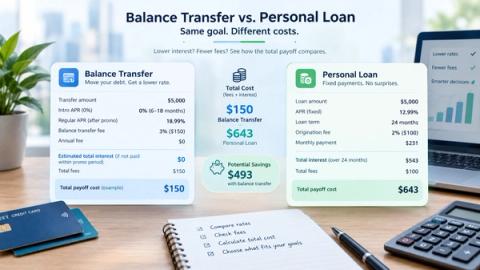
There is also a 0% intro APRThe yearly cost of borrowing, expressed as a percentage that includes the interest rate plus most lender fees. for 12 months on purchases and qualifying balance transfersMoving credit card debt onto a new card with a promotional low or 0% rate, so payments attack the balance instead of the interest., useful if you have a large expense on the horizon.
The perk nobody mentions is cell phone protection. Pay your monthly phone bill with the card and you get coverage up to $600 per claim, twice a year, with a $25 deductible. That is real money for a benefit attached to a card that costs nothing to hold.
Best for: anyone who does not want to track categories, and anyone buying their first rewards card.
2. Blue Cash Preferred® Card from American Express — Best for Grocery-Heavy Households
This is the highest grocery rate on the market, and for families it is not close. The Blue Cash Preferred earns 6% cash back at U.S. supermarkets on up to $6,000 per year in purchases, then 1% after that. It also pays 6% on select U.S. streaming subscriptions, 3% at eligible U.S. gas stations and on transit, and 1% on everything else.
The welcome offer runs as high as $300 cash back after $3,000 in purchases in the first six months. Amex varies these offers by applicant, so the amount you see when you apply may differ.
The Fine Print That Trips People Up
Three details matter more than the headline rate.
First, warehouse clubs do not count. Costco and Sam's Club purchases earn the base rate, not 6%. Neither Target nor Walmart counts as a supermarket either, which surprises a lot of people.
Second, the $6,000 cap is annual, not monthly. Spend $500 a month on groceries and you hit it exactly, earning $360. Spend meaningfully more than that and an uncapped 3% card may serve you better across the full year.
Third, the annual fee. There is a $0 intro annual fee for the first year, then $95. Do the arithmetic before you apply: $360 in grocery rewards against a $95 fee is a clear win, but only if your grocery spending is genuinely there.
Best for: households spending $300 or more a month at U.S. supermarkets.
3. Chase Freedom Unlimited® — Best Blended Earner
The Freedom Unlimited sits between flat-rate simplicity and category chasing. It earns 5% on travel booked through Chase Travel, 3% at drugstores and on dining including takeout and eligible delivery, and 1.5% on everything else. No annual fee. The welcome offer is $200 after $500 in purchases in the first three months, and the intro APR runs 0% for 15 months on purchases and balance transfers.
Here is the honest comparison, since the marketing will not give it to you. On general spending, 1.5% loses to a flat 2% card. The card wins when your dining and drugstore spending is heavy enough for the 3% bonus to make up the difference. Roughly $600 a month across those categories is where the math flips. Below that, take the Active Cash.
Best for: people who eat out often and already bank with Chase.
4. Capital One Savor — Best No-Annual-Fee Card for Dining and Groceries
The Savor is the answer for readers who want grocery rewards without paying for the privilege. It earns 3% at grocery stores, on dining, on entertainment, and on popular streaming services. It also pays 5% on hotels and rental cars booked through Capital One Travel and 8% on Capital One Entertainment purchases. Everything else earns 1%. There is no annual fee and no foreign transaction fee.
Superstores are excluded from the grocery category, so Walmart and Target purchases earn the base rate. The welcome bonus is 20,000 points after $500 in spending in the first three months, worth $200.
The structural advantage over the Amex is that there is no cap on the bonus rate. Blue Cash Preferred pays more per dollar but stops at $6,000 a year in groceries. The Savor pays less per dollar and never stops. If your household grocery bill runs above roughly $800 a month, the uncapped card pulls ahead over a full year.
Best for: big grocery and dining spenders who refuse to pay an annual fee.
5. Discover it® Cash Back — Best First-Year Value
The Discover it earns 5% back in rotating quarterly categories on up to $1,500 in purchases each quarter when you activate them, plus 1% on everything else. The categories cycle through grocery stores, restaurants, gas stations, and similar everyday spending.
The real draw is Cashback Match. Discover matches all the cash back you earn at the end of your first year, with no minimum and no maximum. That effectively doubles everything, turning the rotating categories into 10% back and the base rate into 2% for twelve months.
Now the part that changed. Capital One began migrating Discover accounts to its own platform on July 27, 2026, with the rollout continuing in waves into early 2027. The Discover brand and the card names stay. The rotating 5% categories and Cashback Match are not going away. Cardholders also gain new 5% categories on hotels, vacation rentals, rental cars, and activities booked through Capital One Travel.
Two redemption details worth knowing: gift card redemptions now carry a $25 minimum, and automatic statement-credit redemptions require re-enrollment after your account moves.
Best for: first-time cardholders and anyone willing to activate a category every quarter.
6. Citi Double Cash® — Best If You Are Paying Down a Balance
The Double Cash pays 2% on every purchase, split in an unusual way: 1% when you buy and another 1% when you pay it off. It also earns 5% total on hotels, car rentals, and attractions booked with Citi Travel. There is no annual fee. The welcome offer is $200 cash back after $1,500 in purchases in the first six months, delivered as 20,000 ThankYou Points.
That split structure has a catch worth stating plainly. You only collect the full 2% if you actually pay the balance. Carry it month to month and you keep just the first 1% while paying interest on the rest.
Where this card genuinely earns its place is the balance transfer offer, which is among the longest available. Note there is no intro APR on new purchases, so this is a debt-payoff tool that happens to earn rewards, not the reverse. Run your numbers through a credit card payoff calculator before you transfer anything.
Best for: people consolidating existing card debt who still want a 2% baseline afterward.
7. Bank of America® Customized Cash Rewards — Best for Existing BoA Customers
This card lets you choose your own 3% category from a list that includes gas, online shopping, dining, travel, drugstores, and home improvement. You can change the selection through Bank of America's site as your spending shifts. On top of that, it automatically earns 2% at grocery stores and wholesale clubs with no selection required. There is no annual fee and a $200 bonus for hitting the required spend in your first 90 days.
The 3% and 2% categories share a combined quarterly spending cap, which is the main drawback against uncapped competitors. Above that cap, everything drops to 1%.
The genuine reason to consider this card is Preferred Rewards. Members earn 25% to 75% more on eligible card rewards, which can push that 3% category above 5%. Qualifying requires an average daily balance between $20,000 and $100,000 across eligible Bank of America and Merrill accounts over a three-month period. If you already keep that kind of balance there, this becomes one of the strongest cashback cards available. If you do not, it is merely fine.
Best for: Bank of America customers who qualify for Preferred Rewards.
How to Actually Pick One
Skip the comparison paralysis and do this instead.
Pull three months of statements and total four buckets: groceries, dining, gas, and everything else. Use real numbers, not what you assume you spend. Almost everyone underestimates dining.
Apply the 25% rule. If no single category accounts for at least a quarter of your spending, take the flat 2% card and stop optimizing. Category cards only pay off when your spending is genuinely concentrated.
Run the fee math honestly. Multiply your annual category spending by the bonus rate, subtract the annual fee, then compare that to what a flat 2% card would return on the same spending. If the gap is under $50, take the simpler card.
Consider two cards instead of one. A flat-rate card for general spending plus one category card covering your biggest expense captures most of the available value without turning your wallet into a spreadsheet.
Frequently Asked Questions
Is a cashback card better than a travel rewards card?
For most people, yes. Cashback is worth exactly what it says, requires no planning, and never expires into a devalued points balance. Travel cards can return more value per dollar, but only if you consistently redeem for travel and understand transfer partners.
Does opening a cashback card hurt your credit score?
Temporarily and modestly. Expect a small dip from the hard inquiryA lender's review of your credit report when you apply for credit — recorded on the report and worth a few points for about a year., recovering within a few months. Over the longer term, a new card raises your total available credit, which can improve your utilization ratioThe share of your available revolving credit you are currently using — one of the largest single inputs to a credit score. and help your score.
Can you have more than one cashback card?
Yes, and many people should. Pairing a flat-rate card with one category card is the most common effective setup. Just keep each account current, because a single missed payment costs more than a year of rewards.
What happens to Discover cards now that Capital One owns them?
Very little from the cardholder's side. Accounts move to Capital One's website and app in waves that began July 27, 2026. Card names, the 5% rotating categories, and Cashback Match all remain. Watch for the redemption changes noted above.
Rates, fees, and welcome offers change frequently and vary by applicant. Confirm current terms directly on the issuer's website before applying. This article is for informational purposes and is not financial advice. For independent guidance on comparing credit cards, see the Consumer Financial Protection Bureau at consumerfinance.gov.