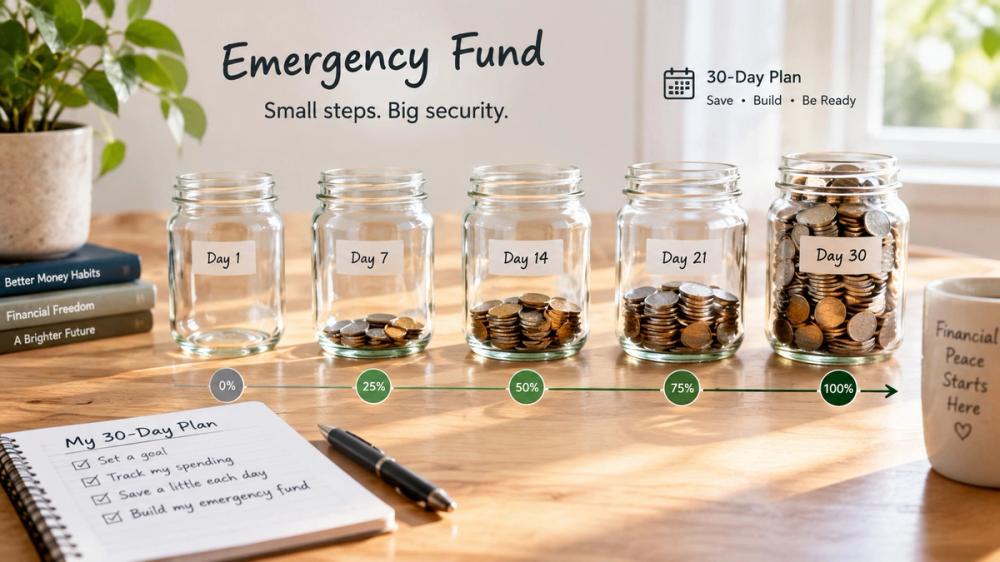
Starting an emergency fundCash set aside in an accessible account to cover unexpected expenses or a loss of income without taking on debt. can feel out of reach when your budget is already tight. You do not need to save a large amount right away. The first goal is to set aside something for an unexpected expense and create a routine you can keep.
This 30-day plan will help you choose a realistic target, find room to save, and set up a simple system. Thirty days may not be enough to build a fully funded emergency fund, but it can be enough to make a useful start.
What is an emergency fund?
An emergency fund is money set aside for an unexpected, necessary expense or loss of income. Common examples include an urgent car repair, a medical bill, a home repair, or a gap in pay. A planned expense, such as an annual insurance premium or holiday shopping, is better handled with a separate savings goal. (consumerfinance.gov)
A small fund can help you handle a surprise without relying entirely on a credit card or loan. The right amount depends on your expenses, income, and circumstances. If you have no savings yet, focus first on an achievable starter goal rather than a large long-term target. (consumerfinance.gov)
Your 30-day emergency fund plan
Days 1–3: Set your first savings goal
Day 1: Choose a starter target. Pick an amount that feels possible, even if it is $25, $100, or $250. You can also use the cost of a recent unexpected bill as a guide. Your first goal is a starting point, not a judgment about how much you should have.
Day 2: List likely emergencies. Write down a few unexpected costs that could disrupt your budget, such as a prescription, car repair, or urgent trip. This can help you decide what the fund is for and set a practical first target.
Day 3: Define your rules for using the money. Consider using it only for expenses that are unexpected, necessary, and urgent. If you use some of the fund, that is what it is there for. You can make rebuilding it your next savings goal. (consumerfinance.gov)
Days 4–7: Find a safe place to keep it
Day 4: Choose an account. Consider a dedicated savings account at a bank or credit union. Look for an option that is easy to access when needed and does not add fees that could eat into small deposits. Check the account’s terms before opening it.
Day 5: Keep the fund separate from everyday spending. A separate account or a clear account label can make it easier to track your progress and avoid spending the money on routine purchases.
Day 6: Check access and timing. Find out how long transfers or withdrawals take, whether there are account limits or fees, and how you can reach the money if you need it.
Day 7: Make your first deposit. Add an amount you can manage today. If that is only a few dollars, you have still started the fund.
Days 8–14: Make room in your budget
Day 8: Review recent spending. Look through a week or month of transactions. Focus on expenses you can change without risking essentials such as housing, food, utilities, transportation, or medication.
Day 9: Pick one temporary adjustment. You might pause a subscription, reduce a takeout order, or choose a lower-cost option for one regular purchase. Direct the money you free up to your emergency fund.
Day 10: Check bill timing. Compare bill due dates with your paydays. If the timing leaves you short, ask a bill provider whether another due date is available. Tracking when money comes in and goes out can help reveal where a small transfer may fit. (consumerfinance.gov)
Day 11: Set a weekly or payday amount. Choose a contribution that fits your current budget. For example, saving $5 a day would add $150 over 30 days, while saving $25 a week would add about $100 in four weeks. These are examples, not required targets.
Day 12: Plan for variable income. If your pay changes, choose a small minimum deposit and add more in higher-income weeks when your essentials are covered.
Day 13: Look for one-time money. If you receive a gift, bonus, refund, or other extra payment, decide in advance whether to put some of it toward your fund. You do not need to save all of it for the habit to help.
Day 14: Review your plan. If you could not save the amount you planned, adjust it. A smaller deposit you can repeat is more useful than a target that repeatedly leaves you short.
Days 15–21: Make saving consistent
Day 15: Set up an automatic transfer, if it fits your cash flow. Choose an amount and schedule that match your paydays. Automatic transfers can make contributions more consistent, but check your checking balance and transfer timing so the payment does not cause an overdraftA bank service that covers transactions exceeding your balance, either by linking another account or by charging a fee to advance the money.. (consumerfinance.gov)
Day 16: Consider splitting direct deposit. If your employer allows it, you may be able to send part of your paycheck directly to savings. Ask your payroll department about the available options. (consumerfinance.gov)
Day 17: Set a balance reminder. Use a calendar reminder or account alert to check your checking and savings balances before transfers occur.
Day 18: Look for avoidable fees. Review recent bank fees, late fees, or subscription charges. If you can prevent a repeat fee, consider putting the amount you save toward your emergency fund.
Day 19: Check whether your target still works. If your income or expenses have changed, reset your contribution. It is reasonable to pause or lower a transfer when money is tight.
Day 20: Make another deposit. Add your planned amount, even if it is small. A recurring contribution can help you build the habit over time. (consumerfinance.gov)
Day 21: Note your progress. Write down your starting balance, your current balance, and the next milestone. Seeing the difference can help you keep track of what your contributions have done.
Days 22–30: Protect the habit and choose your next goal
Day 22: Separate predictable costs. List expenses you know are coming, such as car registration or annual premiums. Plan for those separately so they do not quietly drain your emergency fund.
Day 23: Review your emergency rules. Check that your fund is for unexpected, necessary expenses, not routine spending or planned purchases.
Day 24: Identify a backup option. Consider what you would do if a major bill exceeded your savings. Depending on the situation, you might contact the provider to ask about payment arrangements or review available support programs.
Day 25: Add any extra you can safely afford. If money is available after essentials and bills, consider making an additional deposit. Do not rely on an expected bonus or refund to cover a transfer you cannot currently afford.
Day 26: Check account terms again. Confirm the account’s fees, access rules, and transfer times. Make sure the money remains reasonably accessible for an urgent expense.
Day 27: Review your budget for next month. Keep the contribution that worked, reduce it if necessary, or choose a new amount based on your upcoming bills and income.
Day 28: Choose your next milestone. Once you reach your starter goal, you could aim for the cost of a common emergency you have faced before, then build toward a larger reserve that fits your household’s needs.
Day 29: Make your final planned deposit for the month. Record the amount and your new balance.
Day 30: Set the next 30-day plan. Choose your contribution schedule, next milestone, and a reminder to check your progress. If you had to use the fund this month, plan how to replenish it when your budget allows.
Where should you keep an emergency fund?
Choose a place that balances safety, access, and separation from everyday spending. A dedicated savings account at a bank or credit union may work for many people. Before opening an account, compare fees, withdrawal or transfer rules, and how quickly you can access the money. The CFPB also notes that keeping cash at home is an option, but cash can be lost, stolen, or damaged. (consumerfinance.gov)
What if you cannot save every week?
Your contribution may need to change from month to month. Start with an amount that does not put essential bills at risk, and adjust it when your income or expenses change. If an automatic transfer would leave you short, use a smaller amount or make deposits manually when you know money is available.
If you have to use credit for an emergency, try to understand the repayment cost and look for ways to avoid adding more fees or interest. Your savings plan does not have to be perfect to be useful. Even a small reserve can give you another option when an unexpected expense arrives. (consumerfinance.gov)
Keep building after the first month
At the end of 30 days, focus on what you have set up: a first deposit, a clear purpose for the money, and a plan for future contributions. The fund may still be small, but you have created a starting point.
Keep your target realistic, review it when your circumstances change, and rebuild the fund after using it. Consistent saving matters more than reaching a particular balance on a set schedule. (consumerfinance.gov)