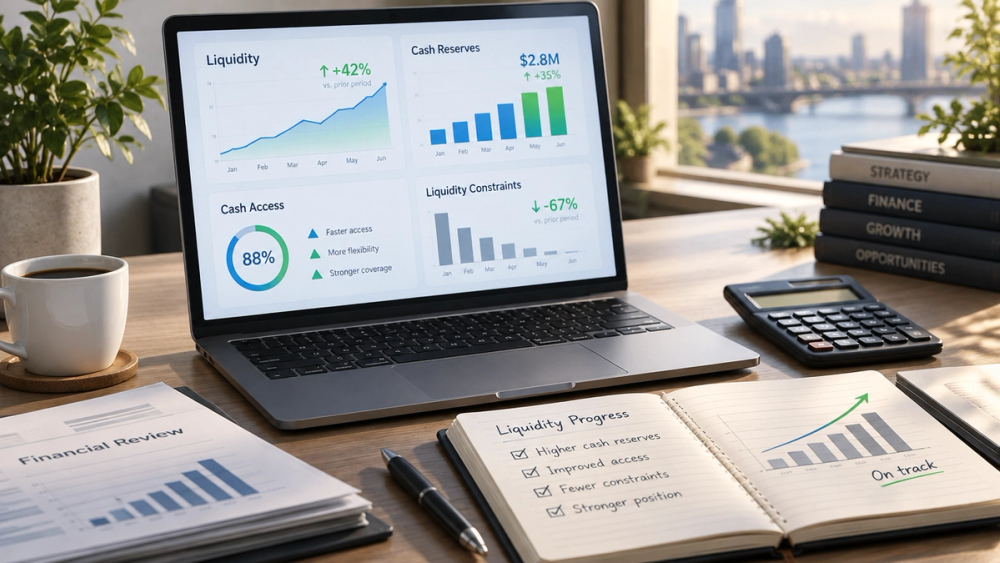
Running out of cash when you need it most creates stress that affects every financial decision. Whether you're facing an unexpected car repair, a medical bill, or simply want the flexibility to take advantage of opportunities, knowing how to improve liquidity gives you options instead of panic.
Most people keep too much money locked up in assets they can't access quickly. You might have equity in your home, retirement accounts you can't touch without penalties, or investments that would take weeks to convert to cash. The eight strategies below focus on building accessible reserves and restructuring what you already have so you can cover emergencies, reduce financial stress, and make decisions from a position of strength rather than desperation.
Build an emergency fund
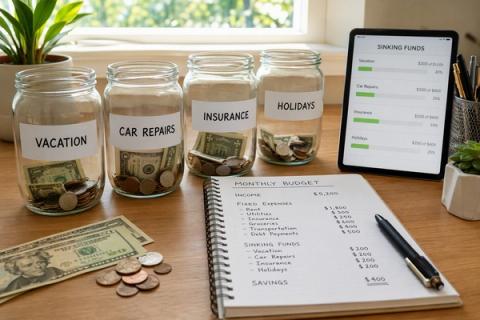
An emergency fundCash set aside in an accessible account to cover unexpected expenses or a loss of income without taking on debt. is cash set aside to cover unexpected expenses without forcing you to sell investments or take on debt. It forms the foundation of liquidity because it gives you immediate access to money when you need it most.
The standard target is three to six months of essential expenses. Calculate yours by adding up rent or mortgage, utilities, groceries, insurance, minimum debt payments, and transportation. Multiply that monthly total by three for a starter goal, six for more security.
If the full amount feels overwhelming, start with $500 to $1,000. Even a small buffer prevents minor emergencies from becoming debt spirals.
Keep your emergency fund in a high-yield savings accountA federally insured savings account paying a much higher rate than a typical bank account, with full access to your money.. You'll earn modest interest while maintaining same-day or next-day access to your money. Avoid checking accounts, which pay almost nothing, and avoid investing emergency funds in stocks or bonds, which can lose value exactly when you need the cash.
Keep cash in a high-yield savings account
High-yield savings accounts pay significantly more interest than traditional savings accounts while keeping your money fully accessible. Where a standard savings account might pay 0.01% to 0.10%, many HYSAs currently offer rates above 4.00%, meaning a $10,000 balance earns $400 annually instead of $10.
Your funds remain liquid. Most HYSAs allow same-day transfers to linked checking accounts, with money arriving within one to two business days. You can withdraw whenever needed without penalties, unlike certificates of depositA deposit account that locks your money in for a fixed term at a fixed rate, with a penalty for taking it out early. or other time-locked accounts.
FDIC insuranceFederal backing that protects deposits up to $250,000 per depositor, per institution, per ownership category. covers up to $250,000 per depositor, per institution, combining safety with accessibility. This makes HYSAs ideal for emergency funds and short-term savings where you want both growth and immediate access. The accounts typically have no minimum balance requirements and no monthly fees, particularly at online banks that pass overhead savings to customers through higher rates.
Set up automatic savings transfers
Automation removes the moment where you decide whether to save. When transfers happen without input, money moves to savings before you mentally allocate it to spending.
Schedule transfers for one or two days after your paycheck clears. Money that never sits in your checking account doesn't feel available, which prevents the creep of lifestyle inflationThe tendency for spending to rise alongside income, so a raise improves how you live without improving your finances. as income rises.
Start with a percentage you won't notice. Even 5% of each paycheck adds up: someone earning $4,000 monthly saves $2,400 in a year at that rate. After two or three months, increase by another percentage point. Small, frequent transfers build liquid reserves faster than waiting for a large surplus that rarely materializes.
Most banks and many employers let you split direct deposits across accounts, sending a set amount to savings before the rest reaches checking. The effect is the same: consistent accumulation without ongoing decisions.
Reduce high-interest debt
Debt payments lock up cash flow that could otherwise build liquid reserves. A $5,000 credit card balance at 20% APRThe yearly cost of borrowing, expressed as a percentage that includes the interest rate plus most lender fees. requires roughly $150 in minimum payments each month—money that can't be used for emergencies or saved in accessible accounts.
Prioritize high-interest debt like credit cards first. These drain resources fastest through compoundingInterest earned on both your original money and the interest already added to it, which makes balances grow faster over time. interest charges that stack up even when you're making regular payments. Paying down a card charging 18% delivers a guaranteed 18% return in avoided interest, better than most liquid investments offer.
This approach delivers a dual benefit. Lower monthly obligations free up immediate cash flow while reducing financial vulnerability. Once a credit card is paid off, redirect that monthly payment straight to a high-yield savings account. A household clearing $300 in monthly debt payments can build $3,600 in liquid savings within a year by maintaining the same cash allocation.
Diversify into liquid investments
Liquid investments are assets you can convert to cash quickly without losing significant value. They sit between checking accounts and long-term holdings, offering higher returns than savings accounts while remaining accessible within days.
Money market funds typically yield more than standard savings accounts and allow same-day or next-day withdrawals. Short-term bond funds with maturities under two years provide modest returns with low volatility. Brokerage accounts holding stable assets like Treasury billsShort-term US government debt sold at a discount to face value, maturing in a year or less and backed by the Treasury. or diversifiedSpreading money across many investments so that a loss in any one of them does limited damage to the whole portfolio. ETFsA fund holding a basket of investments that trades on an exchange like a single stock, usually tracking an index at low cost. give you flexibility to sell and transfer funds within the standard settlement period.
These options work well for money you might need within the next few months but not immediately. A brokerage account holding a mix of bond funds and conservative equity positions can serve as a middle layer between your emergency fund and retirement accounts, giving you liquidity without sacrificing all growth potential.
For more detailed guidance on building a liquid portfolio, see our article on liquidity in investing.
Avoid over-concentrating in real estate
Real estate is one of the least liquid asset classes you can own. Selling a property typically takes 30 to 90 days or longer, depending on market conditions and location. You also face substantial transaction costs: real estate agent commissions, closing costsThe fees and prepaid items due when a property sale or refinance completes — typically 2% to 5% of the loan amount for a buyer., and transfer taxes can easily consume 8% to 10% of the sale price.
When too much of your net worthEverything you own minus everything you owe — the single clearest measure of your overall financial position. sits in your primary residence or rental properties, you lack the cash reserves to handle unexpected expenses or take advantage of opportunities. A job loss, medical emergency, or urgent repair can force you to sell under pressure, often at a discount.
Before expanding your real estate holdings, build liquid reserves equal to at least six months of expenses. This buffer lets you hold property through market downturns rather than selling at the wrong time.
Review and cut unnecessary expenses
Cutting spending improves liquidity twice: you free up cash immediately and reduce the monthly baseline you need to cover. A careful audit of recurring charges often uncovers subscriptions you forgot about, memberships you no longer use, and services that duplicate each other. Streaming platforms, gym memberships, software renewals, and premium tiers you signed up for during a trial period are common targets.
Even modest cuts add up when you redirect the savings into liquid accounts. Trimming $100 per month and moving it to a high-yield savings account puts $1,200 into your emergency fund by the end of the year. Just as important, lowering your monthly spending reduces the emergency fund target itself. If you need three months of expenses and you cut your monthly burn by $200, your liquidity goal drops by $600, making adequate cash reserves easier to reach.
Keep liquid assets before making large purchases
Before committing to any major purchase, check whether it would drain your liquid reserves below safe levels. A new car, home renovation, or investment property might look attractive, but if buying it leaves you with less than three months of expenses in accessible cash, you're trading opportunity for vulnerability.
Illiquid purchases lock up capital for months or years. Real estate, vehicles, and collectibles can't be converted to cash quickly without accepting steep discounts or waiting for the right buyer. During that time, you're exposed if an emergency hits.
Use this framework: confirm your emergency fund is fully funded first. Then evaluate whether your remaining liquid assets, after the purchase, would still cover unexpected expenses comfortably. If the purchase would leave you stretched thin, either save more first or choose a smaller commitment that preserves your financial flexibility.
How to improve liquidity: start with the foundation
Improving liquidity starts with protecting what you already have. Build an emergency fund first—even $1,000 provides a buffer while you work toward three to six months of expenses. Automate transfers into a high-yield savings account so the decision happens once, not every payday. If debt payments consume your cash flow, prioritize paying down high-interest balances before adding to investments. Once your foundation is secure, diversify into liquid assets that balance access with returns, and avoid locking too much capital into real estate or other illiquid holdings. The goal is financial flexibility: enough accessible cash that an unexpected expense or opportunity doesn't force a bad decision.