
Starting with $500 can feel almost laughably small in a world where people talk about six-figure portfolios and “generational wealth” like they’re ordering coffee. But honestly, $500 is enough to begin. Not enough to retire next year. Not enough to outsmart Wall Street. Enough to build the habit that matters.
That’s the real point of Investing 101: where to start with $500 or less. You’re not trying to become a market genius overnight. You’re learning how to put money to work without gambling your peace of mind.
What $500 Can Actually Do for a Beginner Investor
A $500 investment probably won’t change your life by itself. That’s not the job of your first investment. Its job is to get you moving.
Think of it like going to the gym for the first time. One workout won’t transform your body. But it breaks the spell. It proves you can show up. Investing works the same way. Your first $100, $250, or $500 teaches you how accounts work, how markets move, and how your emotions react when prices wobble.
The powerful part comes later through consistency and compoundingInterest earned on both your original money and the interest already added to it, which makes balances grow faster over time.. Compounding means your investment earns returns then those returns can earn returns too. It’s slow at first. Almost annoyingly slow. Then time starts doing the heavy lifting.
The Investor.gov compound interest calculator is worth playing with because it makes the idea visible. Small monthly deposits can grow into something meaningful when you give them years instead of weeks.
Before You Invest $500 or Less, Check Your Foundation
Before opening an investing app and buying whatever looks exciting, pause for a minute. A good investing plan starts with stability.
Make Sure Your Basic Bills Are Covered
Don’t invest money you need for rent, groceries, utilities, insurance, or next month’s car payment. The stock market can drop at exactly the wrong moment. If you need to sell during a downturn just to cover life’s basics, you’ve turned a temporary market dip into a real financial problem.
Money needed soon belongs somewhere safer. Boring? Yes. Useful? Absolutely.
Build a Small Emergency Buffer
If you have no emergency savingsCash set aside in an accessible account to cover unexpected expenses or a loss of income without taking on debt., your first $500 may belong in a high-yield savings accountA federally insured savings account paying a much higher rate than a typical bank account, with full access to your money. instead of the market. That might not sound like investing. Still, it protects your future investments.
Even a small cash cushion can keep a flat tire or surprise medical bill from becoming credit card debt. The FDIC offers helpful consumer information on insured bank accounts if you want to understand how deposit protection works.
Pay Down High-Interest Debt First
If you’re carrying credit card debt at a high interest rateThe percentage charged for borrowing money or paid for depositing it, quoted as an annual figure., paying it down may beat investing. Here’s what I mean: earning a possible 7% or 8% annual return while paying 20% or more on debt is like filling a bucket while someone drills holes in the bottom.
That doesn’t mean every dollar must go to debt forever. But expensive debt deserves priority.
Best Places to Start Investing with $500 or Less
Once your basics are steady, you can choose where to place your money. The right option depends on your goal and timeline.
Open a Roth IRA for Long-Term Retirement Investing
A Roth IRAA retirement account funded with after-tax dollars where qualified withdrawals, including all growth, come out tax-free. can be one of the best beginner investing accounts if you qualify. You contribute money after taxes then qualified withdrawals in retirement can be tax-free. That tax treatment gives long-term investors a serious advantage.
The important detail: a Roth IRA is an account. It is not an investment by itself. After opening the account, you still choose what to buy inside it. Many beginners use low-cost index fundsA fund that mechanically tracks a market index rather than picking stocks, giving broad exposure at very low cost. or ETFsA fund holding a basket of investments that trades on an exchange like a single stock, usually tracking an index at low cost. because they offer broad exposure without requiring stock-picking skill.
You can read the official rules through the IRS Roth IRA guide.
Buy a Low-Cost Index ETF
For many beginners, a low-cost index ETF is the cleanest starting point. An ETF, or exchange-traded fund, lets you buy a basket of investments in one transaction. Instead of betting everything on one company, you can own tiny slices of hundreds or even thousands of companies.
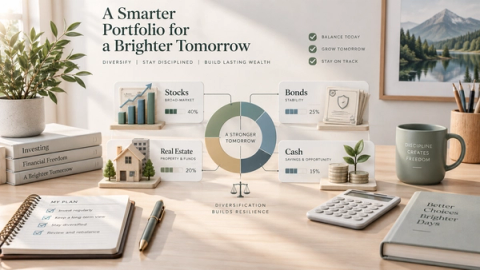
That matters because diversificationSpreading money across many investments so that a loss in any one of them does limited damage to the whole portfolio. reduces the damage caused by any single company failing. One stock can collapse because of bad earnings, poor leadership, lawsuits, regulation, or simple market panic. A broad fund spreads that risk.
The SEC’s guide to mutual funds and ETFs explains how these products work and what investors should review before buying.
Use Fractional Shares
Fractional shares make investing with $500 or less much easier. If one share of a company or ETF costs more than you want to spend, many brokerages let you buy part of a share.
This is useful for beginners because you can invest $25, $50, or $100 at a time. You don’t need to wait until you can afford full shares. Just remember, fractional access does not erase risk. A tiny piece of a risky investment is still risky.
Consider a Robo-Advisor
A robo-advisorAn automated service that builds and maintains a diversified portfolio for you based on a short questionnaire, for a low annual fee. can help if you want a guided approach. You answer questions about your goals, timeline, and risk tolerance. The platform then builds a portfolio for you.
This can work well if you want simplicity. You won’t need to choose individual funds yourself. Still, check the fees. A small account can feel the drag of unnecessary costs.
How to Invest $500: A Simple Beginner Plan
Start with the goal. If the money is for retirement, consider a Roth IRA or workplace retirement plan. If your employer offers a match, look there first because matching contributions are about as close to free money as personal finance gets.
If the money is for a home repair next year, avoid stock market risk. A high-yield savings account or short-term Treasury billShort-term US government debt sold at a discount to face value, maturing in a year or less and backed by the Treasury. may fit better. TreasuryDirect explains Treasury bills at TreasuryDirect.gov.
Next, choose a simple investment. For long-term goals, broad index funds often make more sense than individual stocks. They’re not flashy. That’s kind of the point. Flashy usually gets expensive.
Then automate. Even $25 a month builds discipline. Automation also removes the emotional drama of trying to guess whether today is the perfect day to invest. Spoiler: nobody knows.
Common Mistakes to Avoid When Starting with $500
The first mistake is putting everything into one hot stock. It feels exciting because the upside looks huge. But concentration cuts both ways. One bad headline can hit hard.
The second mistake is confusing investing with gambling. Meme stocks, options, crypto hype, and “guaranteed return” promises can look tempting. If the strategy depends on perfect timing and internet strangers yelling in all caps, it probably isn’t a beginner plan.
The third mistake is ignoring fees. Expense ratiosThe annual percentage of your investment that a fund charges to operate, deducted automatically from returns., trading costs, advisory fees, and account maintenance fees can quietly eat small balances. Low-cost investing gives more of your money the chance to stay invested.
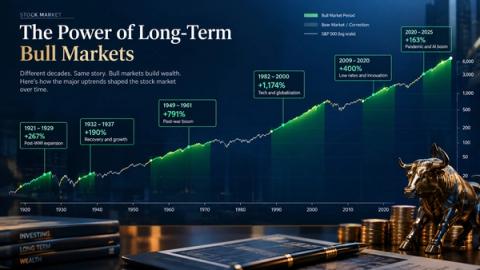
The fourth mistake is panic selling. Markets fall. Sometimes sharply. That doesn’t mean something has gone wrong with your plan. It means stocks are doing what stocks do. Match your investments to your timeline before buying and those drops become easier to survive.
Investing 101 Starts Small
You can start investing with $500 or less. The smarter question is where that $500 belongs right now.
If you have no emergency fund, keep it safe. If you have high-interest debt, attack the debt. If your foundation is stable and your goal is long-term growth, consider a Roth IRA, a brokerage account, and low-cost diversified funds.
Investing 101 is not about finding the perfect stock. It’s about making one thoughtful move then repeating that behavior over time. Start small. Keep it simple. Let time do its quiet work.