Scams rarely feel obvious while they’re happening. That’s the cruel part. A message looks official. A caller sounds confident. A deal feels urgent. And before you’ve had a proper second to think, someone is pushing you to click, pay, confirm, verify, or “fix” a problem that may not exist.
The good news is that most scams share recognizable patterns. Once you know the warning signs, you can slow the whole thing down. And honestly, slowing down is often enough to break the scammer’s grip.
1. You’re Being Pressured to Act Right Now
Urgency is one of the clearest signs you’re being scammed. Fraudsters know that calm people ask questions, check websites, call banks, and talk to family members. So they try to create panic.
You might hear things like:
- “Your account will be locked today.”
- “You’ll be arrested if you don’t pay now.”
- “This offer expires in 10 minutes.”
- “Do not tell anyone.”
- “Your package is stuck until you pay this fee.”
That pressure is not accidental. It’s the engine of the scam.
A legitimate bank, government agency, delivery company, or major service provider will not usually demand immediate payment through a random text, threatening phone call, or suspicious email. Real organizations give you ways to verify the issue through official channels.
What to do immediately
Stop responding. Don’t click links. Don’t call the number inside the message. Instead, go directly to the official website or use a phone number from a trusted source such as your bank card, billing statement, or official account portal.
If the caller gets angry when you ask to verify the request, that’s useful information. Real support teams don’t need to trap you in a conversation.
2. They Ask for Strange Payment Methods
Payment method is a huge clue. Scammers often avoid credit cards because card payments may offer dispute protections. Instead, they push faster and harder-to-reverse methods.
Be extremely cautious if someone asks for payment through:
- Gift cards
- Cryptocurrency
- Wire transfers
- Prepaid debit cards
- Cash apps
- Money orders
- Direct cash deposits
Gift cards are especially suspicious. No legitimate tax office, police department, utility provider, tech company, or bank wants you to settle a serious issue with gift card codes. That’s not how real billing works.
Crypto scams have also become more common because transactions can move quickly and recovery can be difficult. A “guaranteed investment return” paired with crypto payment pressure should set off every alarm you have.
What to do immediately
If you already paid, contact the payment provider right away. Ask whether the transaction can be stopped, reversed, frozen, or disputed. Time matters here.
Then gather everything: receipts, wallet addresses, transaction IDs, usernames, emails, phone numbers, screenshots, and website links. You can report fraud through the FTC’s ReportFraud.gov in the US. For internet-enabled fraud, the FBI Internet Crime Complaint Center is also a key reporting channel.
3. You Receive Suspicious Links, Attachments, or Login Requests
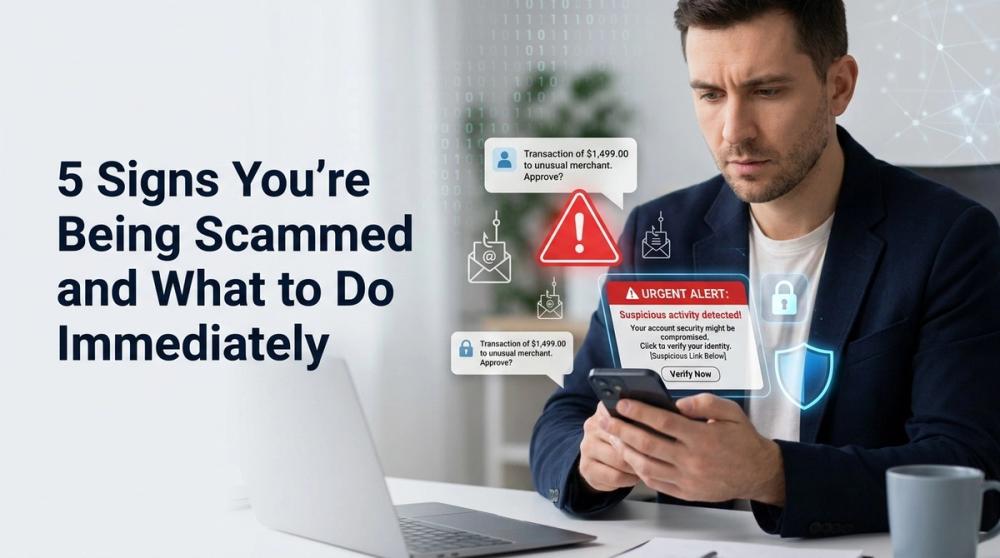
Phishing scams are designed to look ordinary. That’s why they work. A fake bank alert, delivery update, cloud storage notice, streaming subscription warning, or employer message can appear just real enough to make you click.
The goal is usually simple: steal your login details, card numbers, identity documents, or one-time verification codes.
Watch for these online fraud red flags:
- Misspelled domains
- Shortened links
- Odd sender addresses
- Unexpected attachments
- Generic greetings
- Poor formatting
- Login requests from unsolicited messages
- URLs that almost match a real brand
Here’s what I mean. A fake domain might use “paypa1” instead of “paypal” or add extra words around a trusted brand name. At a glance, it feels close. Under pressure, close can be enough.
What to do immediately
If you clicked but didn’t enter information, close the page and don’t go further. If you entered a password, go to the real website directly and change it. Do this from a clean browser tab or app.
Turn on multi-factor authentication if it’s available. If you downloaded a file, run a reputable security scan. And if you reused that same password anywhere else, change those passwords too. Reused passwords turn one small mistake into a much bigger problem.
4. The Offer Sounds Too Good to Be True
Not every scam uses fear. Some use hope.
A fake job offer promises high pay for little work. A marketplace seller lists a luxury product far below its normal price. An investment group guarantees huge returns. A message says you’ve won a prize you never entered. A new romantic connection suddenly needs emergency money.
These scams work because they meet people where they’re vulnerable. Maybe you need income. Maybe you’re lonely. Maybe you’re excited about a bargain. That doesn’t make you foolish. It makes you human.
Still, unrealistic rewards deserve careful verification.
What to do immediately
Search the company, seller, product, or investment name with words like “scam,” “complaint,” and “review.” Check whether the website domain matches the official brand. Verify job offers through the company’s actual careers page.
Never pay upfront to receive a prize, grant, loan, or job. That’s a classic scam structure. If someone says you must pay a processing fee before receiving money, pause hard.
Also, ask someone you trust to look at the message. Scams often lose power when a second person reads them without the emotional pressure.
5. They Ask for Sensitive Personal Information
Money is not the only target. Your personal information has value too.
Scammers may ask for:
- Social Security numbers or national ID numbers
- Bank login details
- Credit card information
- Driver’s license or passport photos
- One-time passcodes
- Date of birth
- Home address
- Security question answers
One-time passcodes deserve special attention. A code sent to your phone may look harmless, but it can authorize account access, password resets, or money movement. If someone asks you to read out a verification code, treat it as a serious warning sign.
What to do immediately
If you shared sensitive information, secure the affected account first. Change passwords, enable multi-factor authentication, and review recent activity.
Contact your bank or service provider if financial details were exposed. If identity information was shared, consider a fraud alert or credit freeze. In the US, IdentityTheft.gov offers recovery guidance for identity theft situations. The Consumer Financial Protection Bureau also provides helpful fraud and scam resources.
What to Do Immediately If You Think You’re Being Scammed
When something feels wrong, use a simple emergency checklist:
- Stop all communication.
- Do not send more money.
- Do not click more links.
- Save screenshots and records.
- Change exposed passwords.
- Contact your bank or card issuer.
- Enable multi-factor authentication.
- Report the scam to the proper agency.
- Warn friends or contacts if your account was compromised.
The most important move is to interrupt the scam. Scammers want momentum. They want you flustered, isolated, and obedient. Break that rhythm and you regain control.
How to Protect Yourself From Future Scams
A strong scam-defense system doesn’t require paranoia. It requires habits.
Use unique passwords. Turn on multi-factor authentication. Keep your devices updated. Verify urgent requests through official channels. Never share one-time codes. Be skeptical of secrecy. And when money, identity, or fear enters the conversation, slow down.
Think of it this way: real problems survive verification. Scams usually don’t.