Introduction: How a Treasury ladder works
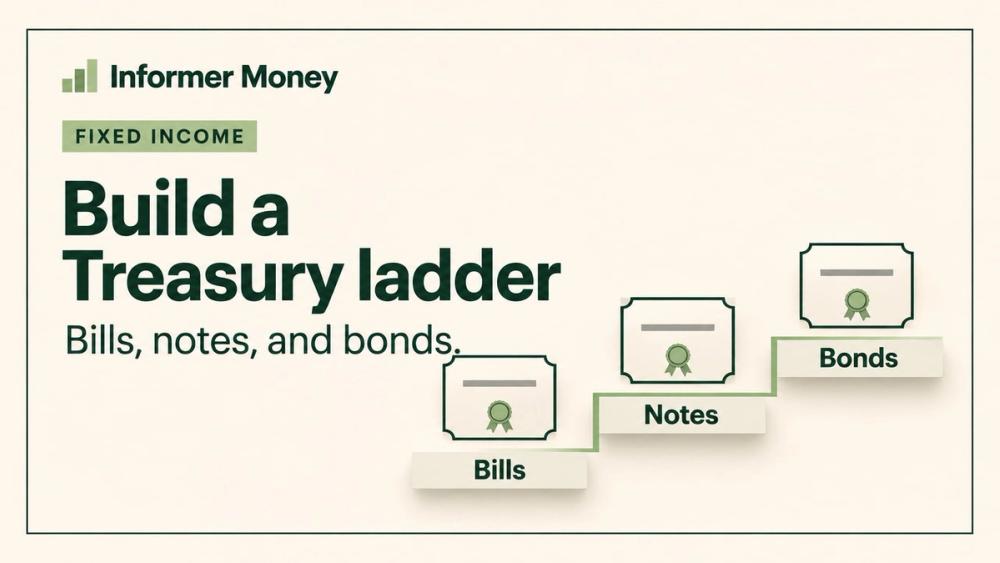
Suppose you need $2,000 in about six months and want other amounts available over the next five years. Building a fixed-income ladder with Treasury billsShort-term US government debt sold at a discount to face value, maturing in a year or less and backed by the Treasury., notes, and bonds lets you schedule when that money comes back. Each rung holds a Treasury security or group of securities that mature around the same date. Once you understand when each security pays, you can match maturities to expenses and decide which proceeds to reinvest.
Treasury bills, notes, and bonds compared
The differences that matter for a ladder are how long each security runs and when it pays interest. Bills cover weeks or months. Notes extend the schedule across several years. Bonds can cover needs decades away.
Treasury bills for near-term spending
The U.S. Treasury issues regular bills for 4, 6, 8, 13, 17, 26 and 52 weeks. Bills sell at face value or at a discount. Treasury pays the face value at maturity. If you pay $1,980 for a bill with a $2,000 face value, the $20 difference is your interest. That payment arrives when the bill matures.
Treasury notes and bonds for longer-dated rungs
Treasury notes have original terms of 2, 3, 5, 7 or 10 years. Treasury bonds come in 20- and 30-year terms. Both pay fixed interest every six months and return face value at maturity. A 3% coupon rate on $2,000 of face value produces two $30 payments a year. Yield to maturity also accounts for the price you pay, which can be above or below face value.
Building a fixed-income ladder with Treasury bills, notes, and bonds
Start with the dates and amounts you expect to need. Equal rungs work when those amounts are similar. If one expense is larger, give its rung a higher face value and choose a maturity that falls before the payment is due.
A five-rung Treasury ladder example
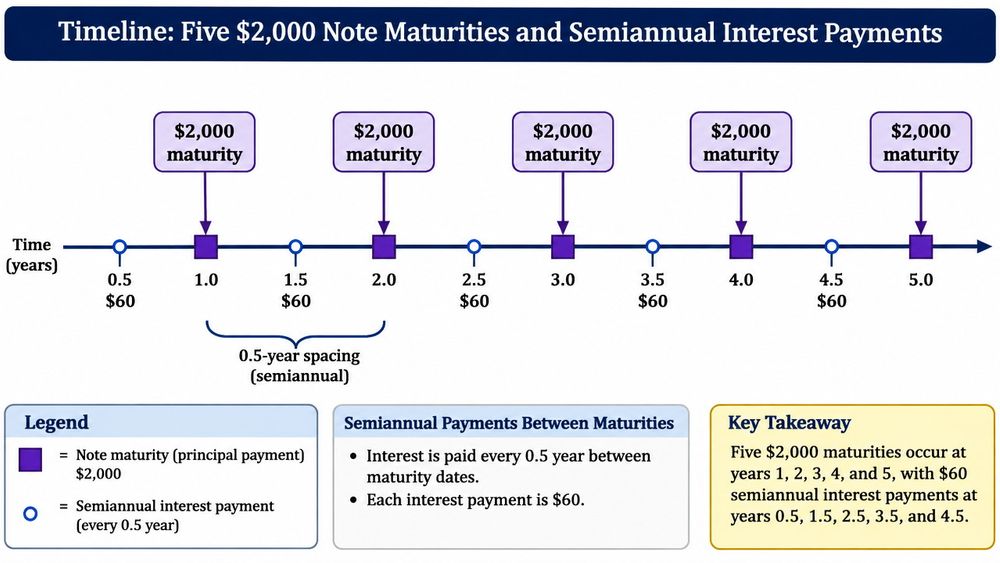
Suppose you want five payouts of $2,000 each. You could build the ladder with these securities:
- About six months: 26-week Treasury bill
- About one year: 52-week Treasury bill
- About two years: 2-year Treasury note
- About three years: 3-year Treasury note
- About five years: 5-year Treasury note
The five maturities return $10,000 in face value if you hold each security to maturity. Your upfront cost depends on the purchase prices. The notes can pay coupons in year four even though no rung matures that year. A 20- or 30-year bond could serve a much later expense. Its market price would generally be more sensitive to interest-rate changes if you had to sell early.
Buy each rung and check the maturity date
You can buy at auction through TreasuryDirect or a broker. TreasuryDirect accepts noncompetitive bids starting at $100 in $100 increments. You agree to accept the rate or yield the auction sets. Check the auction schedule for issue dates, then confirm each rung’s maturity date and the amount you’ll need to pay.
How to manage a Treasury ladder as rates change
Staggered maturities spread reinvestment decisions across several dates. If yields fall before the first bill matures, a replacement bill may earn less. If yields rise, that replacement may earn more. InflationThe general rise in prices over time, which steadily reduces what each dollar of savings can buy. can also reduce what future principal and coupon payments buy.
Spend the proceeds or replace the rung
When the 26-week bill matures, you can use the $2,000 for the planned expense. If the expense moves, choose a maturity that fits the new date. TreasuryDirect’s scheduled reinvestment replaces a bill with another of the same term. To move the proceeds into a 52-week bill, let the 26-week bill redeem and place a separate order. Check both dates before counting on the proceeds to fund the purchase.
Plan for cash needs between maturities
An early sale can produce a gain or loss. The SEC explains that fixed-rate bond prices generally fall when market rates rise and rise when rates fall. Newly purchased TreasuryDirect securities generally have a 45-day holding period before transfer. To sell early, you must transfer the security to a bank, broker or dealer.
Conclusion
When building a fixed-income ladder with Treasury bills, notes, and bonds, start with the next date you’ll need cash. Set the face value for that rung and choose a maturity that gives you time to pay the expense. Repeat for later dates and review each rung before it matures.
Treasury ladder FAQ
Can a Treasury ladder use only T-bills?
Yes. Buy one 4-week bill in each of four successive weekly auctions. Once the ladder is in place, one bill typically matures each week. Check the auction schedule for holiday shifts.
Does a Treasury ladder pay income every month?
Monthly cash flow depends on how you space coupon payments and maturities. A maturing bill returns your original investment plus any interest earned through the purchase discount. Count the interest separately when estimating monthly income.
How is Treasury interest taxed?
According to IRS Publication 550, interest on U.S. Treasury bills, notes and bonds is subject to federal income tax and exempt from state and local income taxes.