Buying your first cryptocurrency feels exciting. It can also feel intimidating, especially once you learn that most crypto transactions are permanent. There is no "undo" button and no customer-service line that can reverse a mistake. That single fact is why learning how to buy crypto safely matters before you spend a cent. This guide walks beginners through a security-first path from setup to your first purchase.
Why Safety Comes Before Speed
Traditional banking gives you a safety net. If your card is stolen, you dispute the charge and recover your money. Crypto works differently. Transactions settle on a public blockchain within minutes, and once confirmed they cannot be reversed. Your account also becomes a target the moment it holds value. For beginners, two risks dominate: weak account security and outright scams. Handle both of these early to make the rest of the process far less stressful.
How to Buy Crypto Safely in 5 Steps
Step 1: Choose a Reputable, Regulated Exchange
Your exchange is your front door, so choose carefully. Look for a platform registered with regulators in your country with a clean security history. Check that fees are transparent and that the exchange publishes proof of reserves or holds insurance. Established, well-known platforms are usually the safest way to buy crypto for newcomers. Be skeptical of any service that contacts you out of nowhere or promises guaranteed profits. Legitimate exchanges do not need to chase you.
Step 2: Lock Down Your Account Before Adding Money
Most beginner losses come from compromised accounts, not sophisticated hacks. Set a long, unique password and store it in a password manager. Turn on two-factor authentication using an authenticator app or a hardware key rather than text messages, which can be intercepted. Consider a dedicated email address for your crypto accounts. These habits take ten minutes. They form the foundation of buying cryptocurrency for beginners without unnecessary risk.
Step 3: Complete Identity Verification
Reputable exchanges ask you to verify your identity with a photo ID. This process, called KYC, can feel invasive at first. In reality it is a trust signal. Regulated platforms are legally required to confirm who their customers are, which protects you from fraud and money laundering. Treat verification as reassurance rather than a red flag. A platform that lets anyone trade anonymously deserves more suspicion, not less.
Step 4: Make Your First Purchase the Smart Way
With security in place, you are ready to buy. Link a payment method and start with a small amount you are comfortable losing. Pay attention to fees and the spread between the buy and sell price, because these costs add up. Many beginners start with established assets like Bitcoin or Ethereum before exploring smaller, riskier tokens. If you plan to invest over time, spreading purchases across weeks—an approach called dollar-cost averagingInvesting a fixed amount on a regular schedule regardless of price, which smooths out your average purchase cost.—can smooth out price swings. This is how to buy Bitcoin safely without trying to time the market.
Step 5: Move Your Crypto to a Wallet You Control
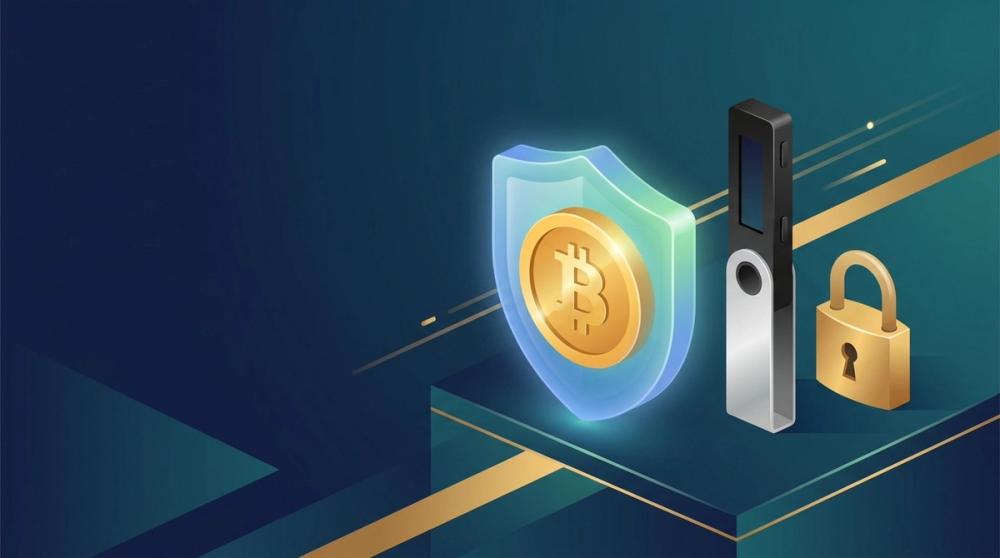
Here is the principle that separates cautious investors from vulnerable ones: not your keys, not your coins. When crypto sits on an exchange, the exchange controls it. A non-custodial wallet puts you in charge instead. For small amounts, a reputable software wallet is fine. For larger holdings, a hardware (cold) wallet kept offline offers the strongest protection. Whichever you choose, write your recovery phrase on paper and store it somewhere safe. Never photograph it, never type it into a website, and never share it with anyone.
5 Scams and Red Flags to Recognize
Knowing how scams work is half of staying safe. Watch for these warning signs:
- Guaranteed returns. No legitimate investment promises fixed profits.
- Fake support agents. Real staff never ask for your password or recovery phrase.
- Phishing links. Always type your exchange's address manually rather than clicking links in emails or messages.
- Romance and "pig-butchering" schemes. Strangers who quickly steer conversations toward investing are dangerous.
- Giveaway and airdrop traps. Anyone asking you to send crypto to "receive more" is lying.
Frequently Asked Questions
Is it safe to buy crypto on an exchange?Yes, when you use a regulated, reputable platform and secure your account properly. The exchange you pick matters more than the asset you buy.
What is the safest way to store cryptocurrency?For meaningful amounts, a hardware wallet kept offline is widely considered the safest option. It removes your keys from internet-connected devices.
How much should a beginner invest first?Only what you can afford to lose entirely. Crypto is volatile, so start small while you learn how the process works.
Safety Is a Habit
Buying crypto safely is less about one perfect decision and more about a repeatable routine. Secure your accounts first, purchase second, and take custody third. Follow that sequence every time to sidestep the mistakes that catch most newcomers.