
A data breach notice says your Social Security number was exposed. If you’re wondering how to freeze your Social Security number, start with a free credit freeze at Equifax, Experian, and TransUnion. There’s no universal freeze for every use of your number. The next step depends on whether you received a breach notice or spotted signs of fraud, such as a credit account you never opened.
What Does It Mean to Freeze Your Social Security Number?
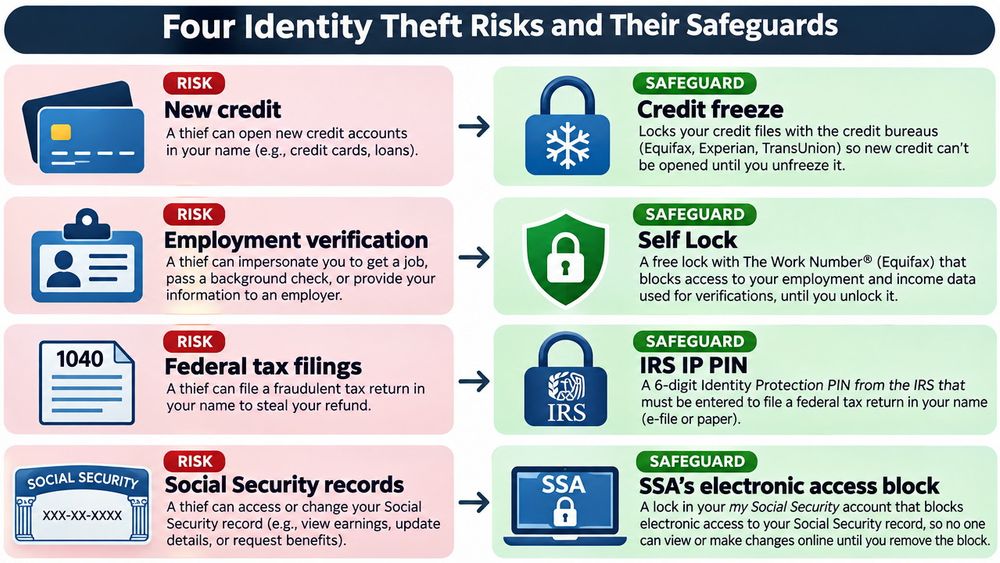
A credit freeze, also called a security freeze, restricts access to your credit reports. If someone uses your Social Security number, or SSN, to apply for a credit card, the lender typically needs your report. A freeze makes it harder for the application to go through.
An unfamiliar charge on a credit card you already use calls for a different response. Contact your card issuer’s fraud department and ask how to secure the account.
How to Freeze Your Credit With All Three Bureaus
Place a security freeze separately with each nationwide credit bureau. Your request to one bureau applies only to the credit report it maintains.
Step 1. Request a free security freeze at each bureau
Start with the official freeze pages for Equifax, Experian, and TransUnion. Each bureau accepts requests online, by phone, or by mail. Choose the security freeze option and follow the bureau’s instructions to verify your identity. If you request a freeze by mail, check which documents the bureau requires before sending it.
Step 2. Confirm that all three freezes are active
Keep each confirmation where you can find it when you next apply for credit. Bureaus must place a freeze within one business day of an online or phone request. For mailed requests, they have three business days from receipt. Each bureau must send written confirmation within five business days after placing the freeze.
Step 3. Temporarily lift a freeze when applying for credit
If you’re applying for a car loan, ask the lender which bureau it plans to check. Request a temporary lift with that bureau for the time the lender needs to review your application. The bureau generally must lift the freeze within one hour of receiving an online or phone request. The freeze resumes when the period you selected ends.
How to Protect Your SSN From Employment and Tax Fraud
Federal agencies offer separate safeguards for employment checks, tax returns, and access to Social Security records.
Use myE-Verify Self Lock for employment verification
Activate Self Lock through myE-Verify to restrict use of your SSN in E-Verify and Self Check. The lock expires after one year unless you extend it. If a new employer uses E-Verify, remove Self Lock before the employer runs the check. Otherwise, the lock can flag your own verification for further review.
Request an IRS Identity Protection PIN
An Identity Protection PIN is a six-digit code that helps the IRS verify your identity when you file a federal tax return. The IRS issues a new PIN each calendar year. You can typically request one through your IRS online account or the IRS app. If online enrollment is unavailable, check your options for applying or verifying your identity in person on the IRS enrollment page.
Ask the SSA to block electronic access to your record
If your Social Security information has been compromised, call the Social Security Administration at 1-800-772-1213 and request an electronic access block. The block prevents anyone, including you, from viewing or changing your record online or through the automated phone service. To restore access, call the SSA and verify your identity.
What to Do If Someone Already Used Your SSN
If you discover an account you never opened, call the company’s fraud department and ask it to close or freeze the account. Report the theft at IdentityTheft.gov for an FTC Identity Theft Report and a recovery plan. Ask the affected credit bureaus to block fraudulent information. Include your report, proof of identity, and a letter identifying the fraudulent entries.
If you’ve received a breach notice, freeze your credit and review all three reports at AnnualCreditReport.com. Look for unfamiliar accounts and follow up on any you find. You can still check your own credit reports with a freeze in place.
Frequently Asked Questions
Does freezing your credit cost money or affect your credit score?
You can place, lift, or remove a security freeze for free. A credit freeze has no effect on your credit scoreA three-digit number, typically 300 to 850, that lenders use to estimate how likely you are to repay borrowed money..
How long does a credit freeze last?
A credit freeze stays in place until you ask the bureau to remove it. For a credit application, you can lift it temporarily.
Can you place a fraud alert while your credit is frozen?
You can keep both protections in place at the same time. An initial fraud alert lasts one year and requires lenders to verify your identity. The bureau you contact must notify the other two.
Can a parent freeze a child’s credit?
A parent or guardian can request a free freeze for a child under 16. Follow the instructions for minors at each bureau. If the child has no credit file, the bureau creates a record to freeze.
Conclusion
If you’re deciding how to freeze your Social Security number after an exposure, start with all three credit reports. If someone has already used your information, contact the affected company and start an FTC recovery plan.