You know that moment when an application comes back denied? Or worse — you go to apply and realize there's no credit history at all, just a blank page where a score should be. It stings. But here's the thing: the choice between secured vs. unsecured credit cards isn't really about which one is "better." It's about which one fits where you are right now. By the end of this, you'll know exactly which side of the line you're on.
The One Difference That Changes Everything
Strip away the marketing and it comes down to a single thing: the security deposit.
A secured credit cardA credit card backed by a refundable cash deposit that sets your limit, used to build or rebuild a credit history. asks you to put money down first — usually somewhere between $200 and $500. That deposit typically becomes your credit limit. And it's not a fee. It's collateralAn asset you pledge to a lender that it can seize if you stop paying — the thing that makes a loan secured.. You get it back when you close the account in good standing or move up to a regular card.
An unsecured credit card skips the deposit entirely. Approval rides on your credit history and income instead. This is the "normal" card most people picture when they hear the words credit card.
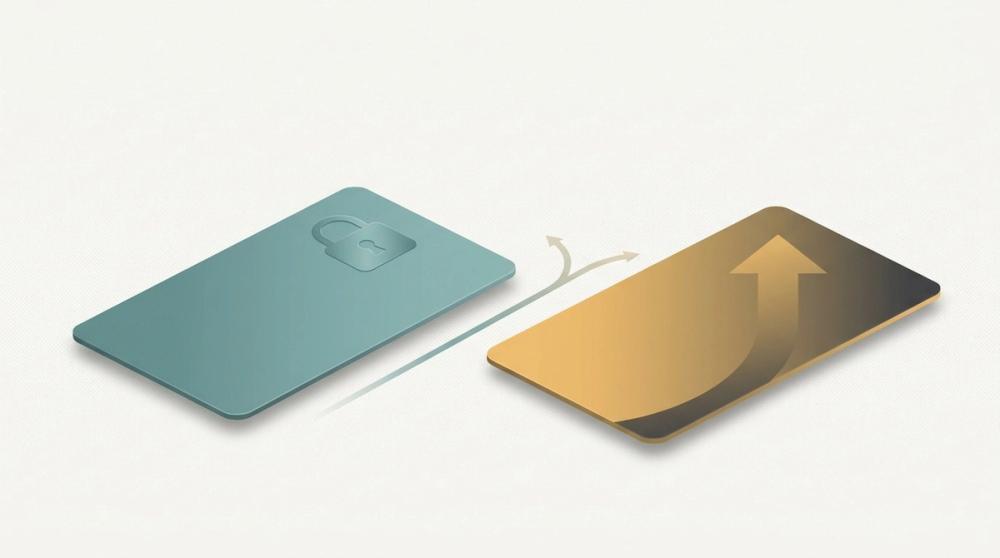
Think about it this way. A secured card is the learner's permit — training wheels with a safety net. Unsecured is the full license. So the real question isn't what's different. It's which one will actually approve you, and which one moves you forward.
When a Secured Card Is the Smart Move
A secured card isn't a consolation prize. It's the right tool for a specific job.
It shines in two situations. First, when you've got no credit history yet — maybe you're young, maybe you're new to the country. Second, when you're rebuilding after something rough knocked your score down, like a default or a bankruptcy.
The magic is in the reporting. A good secured card reports your activity to all three major credit bureaus. That's the entire point. Pay on time and keep your balance low. Your score climbs month after month. (Honestly, low utilization does a lot of quiet heavy lifting here.)
Even better, many secured cards "graduate" you to an unsecured card after a stretch of solid payments — and they hand your deposit back when they do.
But read the fine print. Some charge annual fees. Your deposit ties up cash you might need elsewhere. And here's the real dealbreaker: a few secured cards don't report to the bureaus at all. Those are useless for building credit. Skip them.
When an Unsecured Card Is the Better Fit
If you can qualify, this is usually where you want to be.
An unsecured card makes sense when your credit is already established or at least decent, when you'd rather not lock up a deposit, or when you want perks a secured card rarely matches.
And those perks are real. Cash back. Travel points. Higher limits. Often no annual fee, plus stronger consumer protections and tempting intro offers.
There's a catch, though. Getting rejected doesn't just sting — it can ding your score, because the application triggers a hard inquiryA lender's review of your credit report when you apply for credit — recorded on the report and worth a few points for about a year.. Apply before you're ready and you've burned a credit pull for nothing.
So — Which One Is Right for You?
Let's make this simple. A quick gut-check:
- No credit, damaged credit, or recently denied? Start with a secured card.
- Fair-to-good credit and you want rewards or a higher limit? Go unsecured.
- Genuinely on the fence? Look for prequalification. It's a soft pull, so it won't touch your score.
Whichever way you lean, compare the same four things: Does the card report to all three bureaus? What's the annual fee? What's the APRThe yearly cost of borrowing, expressed as a percentage that includes the interest rate plus most lender fees.? And for a secured card, is there a clear path to graduate?
The right card isn't the flashiest one in the ad. It's the one that matches today and carries you toward tomorrow.
Your Next Step
So if you're starting over or starting fresh, don't read it as a setback. It's step one. Check your credit scoreA three-digit number, typically 300 to 850, that lenders use to estimate how likely you are to repay borrowed money. for free first — most banks and card issuers show it now — then pick your lane. The Consumer Financial Protection Bureau has plenty of plain-English guides if you want to dig deeper.
You've got this.