

If you're counting on a year-end tax move, check when it has to be completed. Your employer or brokerage may have a cutoff before December 31, while some contributions can wait until filing season. Use this guide, "Year-End Tax Planning Checklist: 10 Moves to Make Before December 31," to sort out what needs your attention first.
Start with your latest pay stub, estimated tax payments, and investment gains and losses. You'll use those records to project your federal tax bill, see whether to adjust withholdingThe income tax your employer deducts from each paycheck and sends to the government on your behalf during the year., and decide whether selling an investment at a loss makes sense without triggering a wash saleAn IRS rule disallowing a capital loss if you buy a substantially identical security within 30 days before or after the sale..
This is general information. If you're weighing a large transaction or aren't sure how a rule applies, check with a qualified tax professional. By the end, you'll have a short list of moves that fit your situation and the deadlines to verify before you act.
1. Project your tax bill and flag your deadlines
Start year-end tax planning with a rough tax estimate so you can prioritize moves that could change this year's bill, prevent a penalty or forfeiture, or need extra processing time. Separate decisions to review now from actions to complete by year-end and filings or payments due later.
Use your prior return as a baseline. Pull your latest pay stubs, tax payment records, and expected income to estimate your federal and state tax, then compare that estimate with what you've already paid. For example, a household with wages and an investment sale should estimate the gain or loss rather than count the full sale proceeds as income.
Mark the actions that apply to you and confirm the relevant tax, payroll, and account provider deadlines.
2. Review withholding and estimated tax payments
Compare your projected tax with year-to-date withholding on your latest pay stubs and estimated tax payments in your payment confirmations. Include expected withholding from remaining paychecks. These payments cover your bill; they don't reduce the tax you owe.
If you're short after a larger-than-expected investment gain, you could increase withholding on a remaining paycheck or make an estimated payment. Federal withholding is generally treated as paid evenly throughout the year. An estimated payment generally counts when paid, so a late payment may stop an underpayment penalty from growing without erasing the penalty for an earlier installment.
Confirm your employer's last payroll change cutoff, the applicable installment deadline, and any federal or state safe harbor that helps you avoid a penalty. Consult a tax professional if your income is irregular or the shortfall is substantial.
3. Adjust workplace retirement contributions
If your goal is to lower this year's federal taxable income, traditional 401(k)An employer-sponsored retirement account that lets you invest part of your paycheck before taxes, often with a matching contribution. deferrals generally do; Roth deferrals generally don't. Either choice reduces take-home pay, though a traditional contribution typically reduces it by less than an equal Roth contribution.
Check your remaining contribution room, your employer's match terms, and how many paychecks can still reflect a change. For example, if your employer matches each paycheck separately, check whether it makes up missed matches before front-loading contributions. Workplace deferrals generally come out of pay issued by year-end. Eligible IRA contributions may have a later deadline, but that deadline doesn't extend your payroll window.
Ask payroll when a change would take effect, then choose an amount that leaves enough cash for near-term bills.
4. Harvest investment losses without triggering a wash sale
Tax-loss harvestingDeliberately selling losing investments to realize losses that offset taxable gains and a limited amount of ordinary income. lets you use realized losses in taxable accounts to offset capital gainsThe profit from selling an asset for more than you paid, taxed at a lower rate if you held it longer than a year.. Review your realized gains, unrealized losses and cost basisWhat you originally paid for an investment, adjusted over time — the figure your taxable gain or loss is measured against. before selling. Skip the trade if it no longer makes sense for your portfolio.
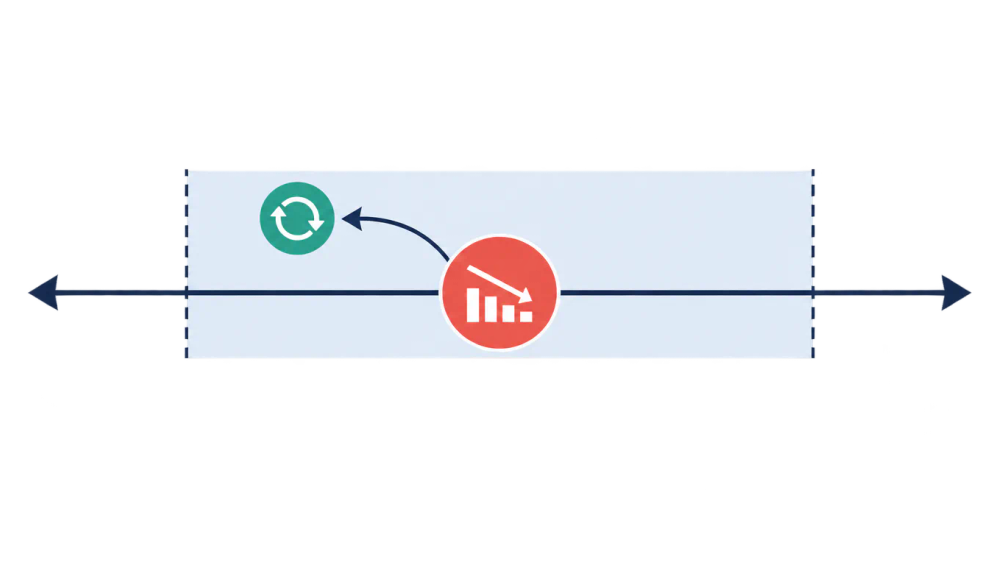
Suppose a trader sells a stock at a loss while an automatic purchase of the same stock is scheduled in another account. Buying a substantially identical security within 30 days before or after the sale can trigger a wash sale and disallow the loss. Your brokerage statement may miss purchases in other accounts.
Check recent and scheduled purchases across accounts, confirm your broker's year-end trading cutoff and consult a tax professional before trading if your cross-account activity is complex.
5. Check for required minimum distributions
Check required minimum distributionsThe amount the IRS obliges you to withdraw from tax-deferred retirement accounts each year once you reach the qualifying age. (RMDs) before year-end so you have time to cover any shortfall. Whether you owe a withdrawal depends on the account type, your status as the owner (such as whether you still work for the employer sponsoring the plan), and whether you inherited the account. Check the required amount for each account and compare it with what you've already withdrawn.
December 31 is the usual deadline, but an eligible first RMD can generally wait until April 1 of the following year. For example, if you wait until April, your next RMD is still due in December, which can put two taxable distributions in the same year.
Confirm the amount, deadline, and processing cutoff with your custodian. Consult a tax professional about inherited accounts or missed distributions.
6. Price out a Roth conversion before authorizing it
Compare your projected tax bill with and without a Roth conversion to see what the move would cost. The taxable portion adds to your income in the year you convert. For example, if you earned less than usual after taking unpaid leave, a partial conversion may be worth evaluating. Check whether the added income would reduce a tax creditA dollar-for-dollar reduction of the tax you owe — worth substantially more than a deduction of the same size. or raise your health insurance premiums.
You generally can't undo a conversion, and you can't convert a required minimum distribution. Consult a tax professional if your IRA contains after-tax contributions or if the added income could affect benefits.
Before authorizing the conversion, confirm your custodian's cutoff for completing it by December 31 and identify cash outside the IRA to pay the tax.
7. Verify health savings account eligibility before contributing
Eligible health savings accountA tax-advantaged account paired with a high-deductible health plan, where contributions, growth, and medical withdrawals are all untaxed. (HSA) contributions can reduce federal taxable income. Verify that your health plan qualifies and that you have no disqualifying coverage, such as a spouse's general-purpose flexible spending accountAn employer account funded with pre-tax salary for medical or dependent care costs, which you generally must spend within the plan year. that covers you. Count both your contributions and your employer's toward the limit.
Ask payroll when you can make your last contribution for the year. If you miss that cutoff, you can generally contribute directly by the federal tax filing deadline, excluding extensions. If you switched to a qualifying plan midyear, your limit may be prorated, so don't assume you can contribute the full annual amount.
Before adding money, confirm your eligibility, remaining contribution room, and deadline for your chosen method. Consult a tax professional if your coverage or eligibility is unclear.
8. Check your flexible spending account balance and deadlines
Check your FSA balance and deadlines before spending: depending on your plan's terms, you may forfeit unused funds. Confirm the last day to incur an eligible expense and the last day to submit a claim. The claim deadline may fall after year-end, even if the expense deadline does not.
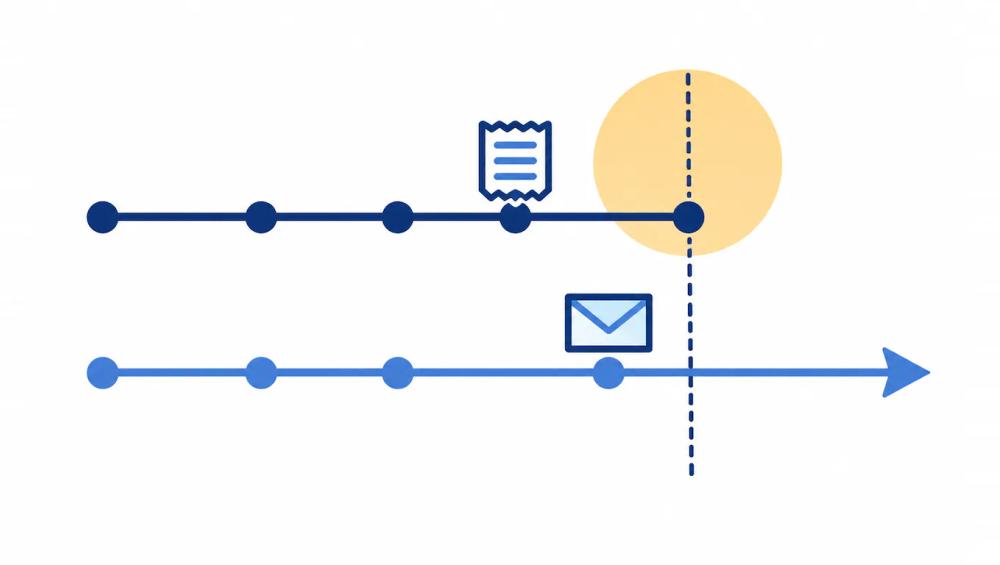
Check your plan documents for a carryover, which lets you keep some unused funds, or a grace periodA window after a due date, or after a purchase, during which no interest or late penalty is applied., which gives you extra time to incur eligible expenses. Before buying anything, review receipts for expenses you've already paid. For example, you may still be able to submit a claim for an eligible copay.
Submit outstanding claims, then schedule an eligible expense you already planned only if the plan deadline and your budget make it worthwhile.
9. Complete planned charitable gifts and save the records
Before making a planned gift, verify that the recipient qualifies for deductible contributions and check whether the gift would increase your projected year-end tax deductions under the rules for that tax year.
Suppose you could give cash or donate appreciated shares from a taxable brokerage account. A cash gift may be simpler to document, while shares may require extra transfer time and different records. Submitting a transfer request does not necessarily establish the gift date. If you're unsure how to value the shares or document the gift, check with a tax professional.
Confirm the recipient's cutoff for your gift method, complete the gift you already budgeted for, and save the required acknowledgment and any transfer records.
10. Compare deduction timing before paying planned expenses
Before paying a planned expense early, estimate your itemized deductionsA flat amount subtracted from your income before tax is calculated, taken instead of itemizing individual deductions. with and without the payment. Compare both totals with the standard deduction for your filing status. If neither total exceeds it, paying early won't lower your federal tax bill through itemizing.
Suppose a household can pay an eligible medical bill in December or January. Only eligible medical expenses above the applicable share of adjusted gross income count toward itemized deductions. Even if the December payment clears that threshold, it may add little or no tax benefit, and the household needs the cash sooner.
Before moving a payment, verify its eligibility, timing rules, and documentation requirements. Ask a tax professional if the treatment is unclear. Keep the original schedule if the tax savings don't justify using the cash now.
Turn your year-end tax plan into a deadline list
Start with a rough federal and state tax projection so you can focus on the year-end moves that affect your bill or help you avoid a penalty or forfeiture. Pull out last year's return, your latest pay stubs, and records of estimated payments and investment sales. Then separate what must be completed by year-end from what can wait, and confirm any earlier processing cutoffs with payroll or your account provider.
Avoid rushing a trade, Roth conversion, or early payment for a tax benefit you haven't estimated. Compare the projected tax effect with the cash you'll need, and consult a tax professional if the consequences are unclear. Before you move on, verify that time-sensitive transactions went through, save the confirmations, and put any later payment or filing deadlines on your calendar.
Frequently asked questions
Can I contribute to an IRA after December 31 and count it for the prior year?
Yes. You can generally make a traditional or Roth IRA contribution for the prior tax year by the federal filing deadline, without counting extensions. Tell your IRA provider which tax year the contribution is for. Check the contribution limit and eligibility rules for that year, and confirm whether any traditional IRA contribution is deductible.
Is a December bonus taxed this year if I get paid in January?
A bonus you first receive in January generally counts as income for the new year, even if you earned it in December. If your employer made the money available to you in December without substantial restrictions, it may count for the earlier year. Check your pay records and ask payroll which year's W-2 will include the bonus.
Can a year-end 529 contribution lower my taxes?
A 529 contribution does not reduce federal taxable income, but your state may offer a deduction or credit. Before contributing for the tax break, check whether your state requires you to use a particular plan, how much of the contribution qualifies, and when the plan must receive it. Completing a transfer by December 31 may not be enough if the plan requires earlier processing.
Does filing a tax extension give me more time to pay?
No. A federal extension gives you more time to file your return, but any tax you owe is generally due by the original payment deadline. Estimate your balance and pay what you can by that date to limit interest and possible penalties. Check your state's rules separately because its extension and payment requirements may differ.
What should I check before year-end if I moved to another state?
Save records of your move date, work locations, and state withholding. You may need part-year resident returns in both states, depending on their rules and where you earned income. If you kept a home in your old state or worked remotely across state lines, a tax professional can help you sort out which state can tax which income.