
You sit down to build a budget, open the app, and hit the same wall most people do: the free version does almost everything except the one thing you actually wanted, which is to stop typing in every transaction by hand. That single decision — manual entry or automatic bank sync — is the whole EveryDollar Premium question in a nutshell. Here's the honest answer, based on what the app costs and delivers in 2026.
EveryDollar at a Glance
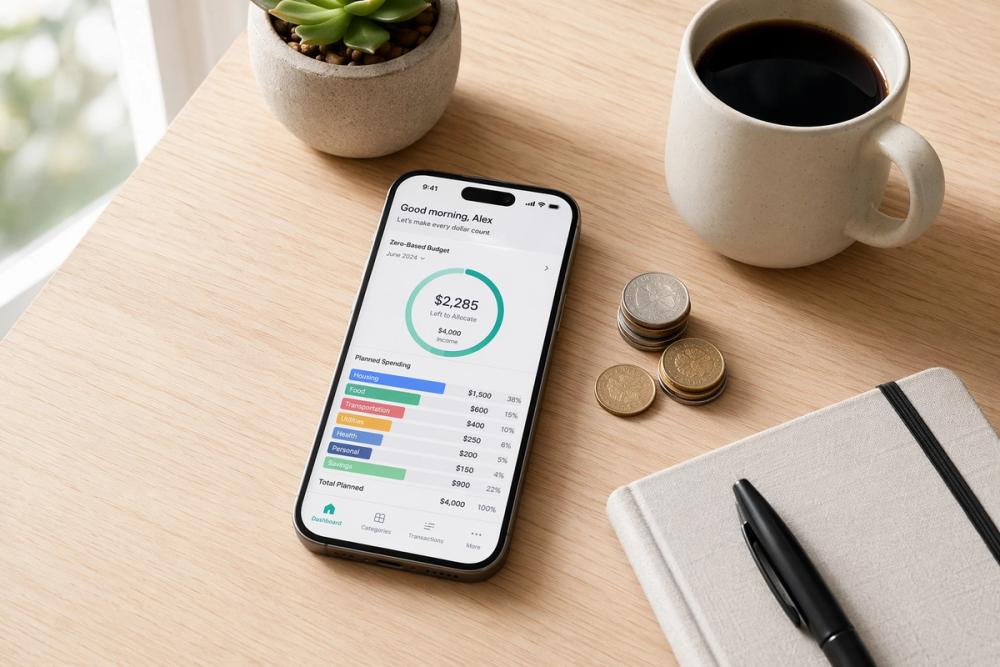
EveryDollar is a zero-based budgetingA budgeting method where every dollar of income is assigned a job in advance, until income minus assignments equals zero. app from Dave Ramsey's Ramsey Solutions, built around a simple rule: every dollar of income gets a job before the month begins. The free tier is genuinely usable and never expires. Premium adds bank syncing and a few coaching tools for $79.99 a year or $17.99 a month. Ramsey relaunched the app in January 2026 with new features, the most notable being Margin Finder. For beginners who want structure without complexity, it's one of the friendliest budgeting tools out there.
Rating: ★★★½☆ (3.5 / 5)
What Zero-Based Budgeting Actually Solves
Most budgeting apps track where your money went. Zero-based budgeting flips that: you decide where every dollar goes before you spend it, down to a zero balance on paper. Income minus expenses minus savings should equal nothing left unassigned. It's the same philosophy behind YNAB, and it works because it forces intention. You stop wondering where the money disappeared because you already gave it a destination.
That's the market EveryDollar plays in — proactive planning, not passive tracking. It won't monitor your investments or your credit scoreA three-digit number, typically 300 to 850, that lenders use to estimate how likely you are to repay borrowed money.. It does one job and tries to do it cleanly.
The Free Tier: Better Than You'd Expect
The free version is where EveryDollar quietly beats most competitors. You get a complete zero-based budget with unlimited categories, sinking fundsMoney set aside a little each month for a known irregular expense, so the bill arrives already paid for rather than as a crisis., split transactions, bill due dates, and access across computer, phone, and tablet. No credit card required. No 30-day countdown. The catch is that every transaction is manual — you type each purchase in yourself.
For a lot of people that's a dealbreaker. For others it's the point, since manual entry keeps you connected to your spending in a way that automatic import never does.
What Premium Adds
Premium exists to remove the friction. The headline feature is bank sync, which streams your transactions in automatically so you're categorizing instead of transcribing. The 2026 relaunch layered on more:
- Margin Finder — a roughly 15-minute guided questionnaire that surfaces forgotten subscriptions, overpriced bills, and recurring costs you've stopped noticing. It's the one new feature reviewers consistently call genuinely useful.
- Paycheck planning — helps you map income against expenses across pay periods.
- Live group coaching — access to real guidance for people who want a human in the loop.
Pros
- Genuinely capable free tier with unlimited categories and no expiration
- Zero-based method makes every dollar accountable before the month starts
- Bank sync is read-only with bank-grade encryption and can't move your money
- Margin Finder surfaces forgotten subscriptions and budget leaks fast
- Annual Premium (about $6.67/mo) undercuts YNAB and Monarch on yearly price
- Clean, beginner-friendly design built around the Ramsey Baby Steps
Cons
- Monthly Premium at $17.99 costs more than YNAB or Monarch for fewer features
- No investment tracking, retirement planning, or credit monitoring
- Mobile app and Premium are US-only; abroad you get the free web version
- Payment requires a debit card since Ramsey doesn't accept credit cards
- Guidance leans hard on Ramsey's anti-credit-card, debt-first philosophy
- Android version trails iOS on ratings and stability
Technical Details and Platform Support
- Platforms: iOS, Android, and web (everydollar.com). The web app is the easiest place to build your initial budget.
- Budgeting method: Zero-based, aligned with Ramsey's 7 Baby Steps.
- Security: 256-bit encryption with read-only bank connections, so the app can view transactions but cannot move funds.
- Pricing: Free tier (permanent) or Premium at $17.99/month or $79.99/year, after a 14-day free trial that requires a payment method on file.
- Payment: Debit card only — credit cards aren't accepted.
- Availability: Mobile app and Premium are US-only. International users can budget with the free web version.
- Ratings: Roughly 4.7 stars on iOS versus 4.3 on Android, where some users report crashes.
- Bundles: Ramsey+ ($129.99/year) packages Premium with Financial Peace University and SmartTax filing.
Official details and current pricing live on Ramsey Solutions' EveryDollar page.
How It Compares
Against its closest rival, YNAB, EveryDollar is simpler and cheaper annually but less flexible — YNAB adds goal tracking, spending targets, and richer reporting for people who want to go deep. Monarch Money paints a broader financial picture with investment and retirement tracking, plus a more modern interface. The pattern is consistent: EveryDollar wins on simplicity and free-tier value, then loses ground once you want features beyond core budgeting.
The pricing quirk worth flagging is the gap between plans. Annual Premium is competitive. The monthly plan at $17.99 works out to roughly $216 a year, which is nearly triple the annual cost and pricier than every major competitor's monthly rate. If you pay Premium, pay yearly.
The Verdict
EveryDollar is one of the best free budgeting apps around. Premium is worth it only if you'll use bank sync and Margin Finder — and only on the annual plan. Skip monthly. If you don't follow the Ramsey method, YNAB serves you better.