
The gifts fit your budget until groceries, wrapping paper and a family visit push the total higher. Holiday overspending often starts with several reasonable purchases that become expensive together.
A holiday budget planner makes those costs visible before the money leaves your account. Setting a spending limit, listing expenses and tracking purchases can help preserve favorite traditions without sacrificing money needed for regular bills.
Set Your Holiday Spending Limit Before Shopping
An affordable holiday budget starts with available money, not a shopping list.
Calculate Available Money and Check Payment Dates
Add dedicated holiday savings to amounts you can realistically contribute from upcoming paychecks. First, protect money needed for essentials, existing obligations and emergency reserves.
The Consumer Financial Protection Bureau recommends accounting for regular expenses before determining holiday spending.
Suppose you’ve saved $200 and can afford four $100 contributions. That creates a hypothetical $600 budget for the season.
Timing matters: money arriving in December cannot fund a November purchase without another payment arrangement. Match purchase deadlines to when funds become available.
Choose Which Traditions Matter Most
Choose two or three priorities, such as visiting family or preparing a special meal. Review last year’s purchases and reduce expenses that added little enjoyment.
Build a Holiday Budget Planner That Includes Every Cost
A useful planner shows what each purchase means for the remaining budget.
List Gifts, Gatherings, Travel and Overlooked Expenses
Start with categories covering the full season, including these frequently overlooked costs:
- Gifts, donations and any seasonal tips you choose to give.
- Additional groceries, restaurant meals and contributions to shared gatherings.
- Travel, childcare, decorations, cards, wrapping supplies and shipping charges.
Count additional holiday costs rather than duplicating expenses already covered by the household budget. For example, include extra celebration groceries instead of the entire monthly grocery bill.
University of Kentucky Cooperative Extension highlights forgotten expenses such as gasoline, babysitting and meals away from home.
Add Planned, Actual and Committed Spending
Create entries for each recipient or expense using these fields:
- Category or recipient, spending cap and estimated purchase cost.
- Purchase deadline, amount already spent and remaining unpaid commitments.
Calculate available money by subtracting purchases and unpaid commitments from the total budget. When a recorded commitment becomes a payment, move it between fields without subtracting it twice.
Show a Hypothetical $600 Holiday Budget
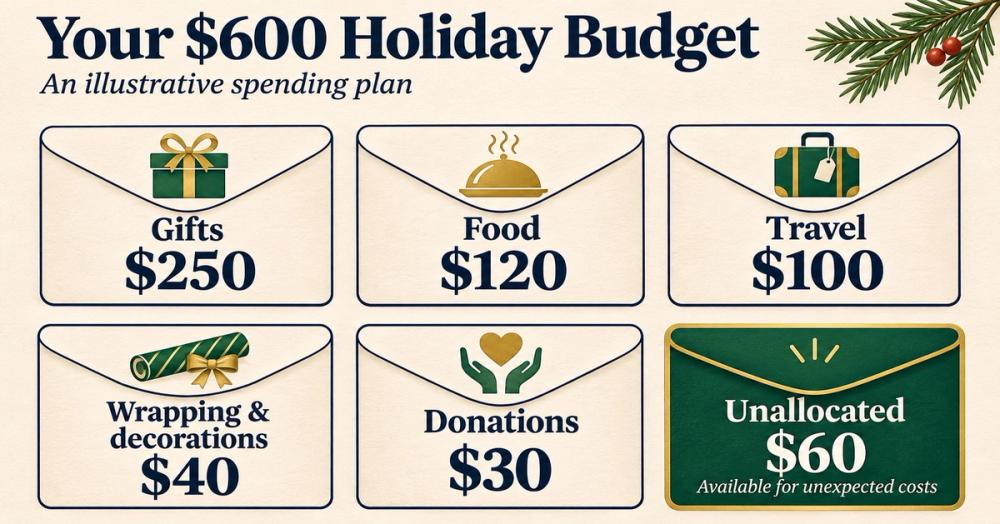
One household might allocate its hypothetical $600 budget as follows:
- Gifts: $250; additional food: $120; travel expenses: $100.
- Wrapping and decorations: $40; donations: $30; unallocated money: $60.
These figures illustrate the calculation rather than recommended spending percentages. A household traveling farther might need fewer gifts and a larger transportation allowance.
How to Spend Less This Season Without Cutting Every Tradition
Reducing the number of purchases can matter more than finding discounts.
Reduce Gift Costs Before Hunting for Discounts
Agree on spending limits before anyone starts buying presents. Drawing names or arranging a shared gift can reduce the number of purchases.
Try a straightforward suggestion: “Could we draw names and agree on a gift limit?”
Homemade gifts deserve a cost check before becoming the cheaper option. Compare ingredients, packaging and supplies with the price of buying something suitable.
Compare Checkout Totals and Return Conditions
A lower advertised price doesn’t necessarily produce a lower final bill. Compare the same product across sellers using prices that include shipping, taxes and fees.
The Federal Trade Commission also recommends checking return postage, deadlines and restocking charges. Avoid buying unwanted extras merely to qualify for a promotion.
Simplify Hosting and Reuse Existing Supplies
Choose a smaller menu or invite guests to contribute agreed dishes. Check cupboards and decoration boxes before adding supplies to the shopping list.
Keep the gathering while reducing purchases that guests may barely notice.
Track Holiday Spending and Keep Borrowing Visible
A spending plan works best when purchases update the remaining balance promptly.
Adjust Categories Without Raising the Total
Record each purchase and review the balance before another shopping trip. If gifts exceed their allocation by $30, reduce another flexible category by $30.
Pause discretionary purchases when the overall available balance reaches zero.
Count the Full Purchase Price, Including Installment Purchases
Buy now, pay later divides payments without reducing the purchase price. Record the full commitment rather than only the first installment.
The CFPB’s BNPL explanation identifies these arrangements as loans and warns about possible late fees. Check repayment dates against regular bills before accepting any agreement.
This information is educational and does not constitute personalized financial advice.